2026-09-28 · 8 min read · Bay Area
Deck and Balcony Checklist for Bay Area Home Buyers
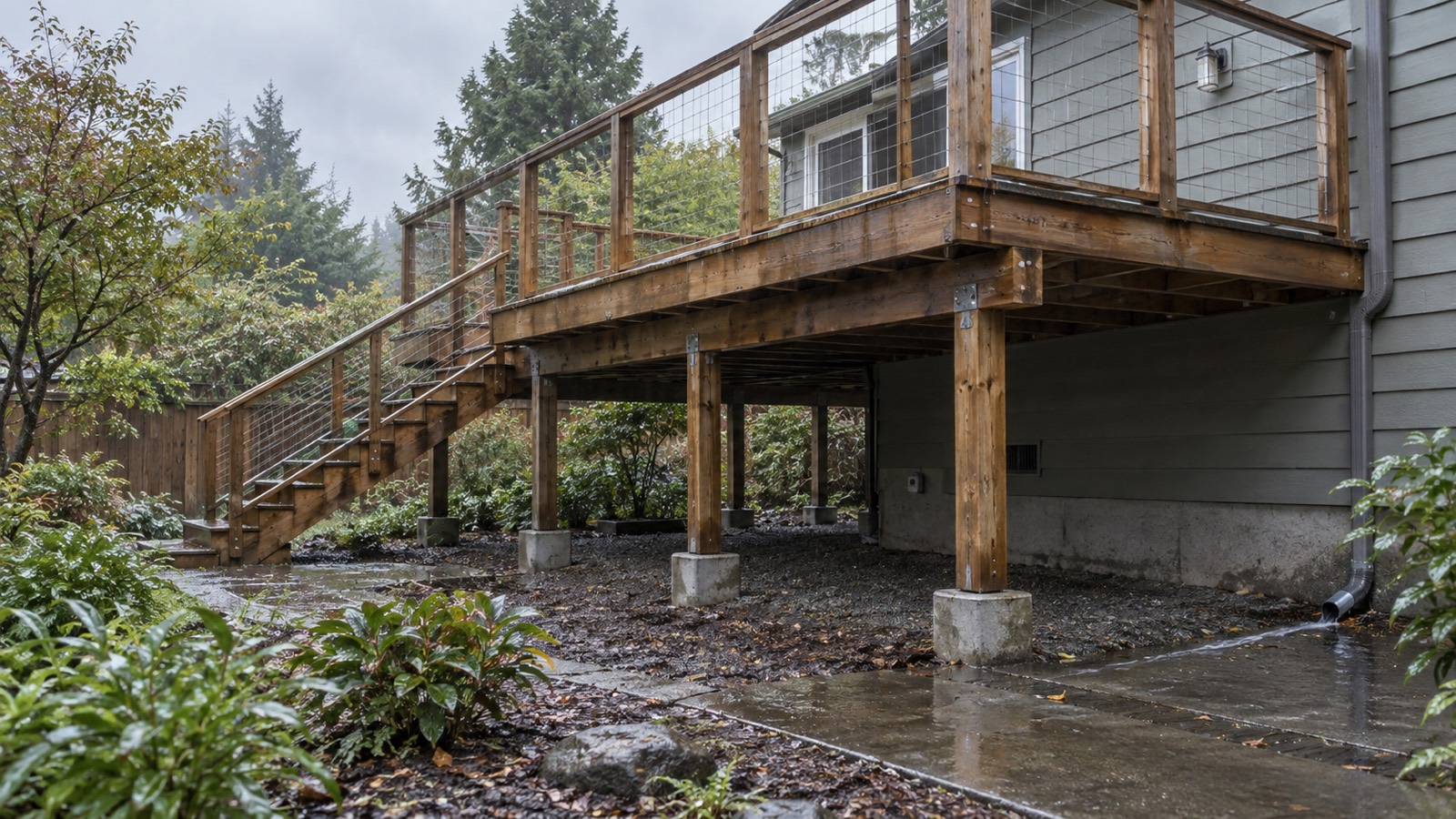
A good view can make you stop looking at the deck
A deck or balcony can win you over in a few seconds. You step outside, look at the view, picture a chair in the sun, and mentally add the space to the value of the home. The feeling is real. It is also incomplete.
The useful review starts after the first reaction. You need to understand access, usable area, surfaces, stairs, railings, visible support, drainage, records, and who is responsible for maintenance. A polished surface cannot answer those questions.
At Crypton Realty, I want buyers to separate what an outdoor space lets them enjoy from what still needs proof. This deck and balcony checklist for home buyers helps you make that list. It is not a structural inspection or a substitute for qualified advice about a specific property.
Start with what you need the space to do
Write down the use you have in mind before the tour carries you away. Maybe you want two chairs, a dining table, planters, a grill, bicycle storage, or simply a place to stand outside. Each plan asks something different from the space.
Look at the actual usable area, not only the outer dimensions. Door swings, stairs, narrow corners, built-in features, railings, mechanical equipment, and required access routes can reduce where things fit. A long balcony may still be too narrow for the furniture you pictured.
Do not move heavy objects or rearrange the seller's belongings during a showing. Measure only when you have permission. If dimensions matter, confirm them instead of estimating from listing photos.
Walk the full route, not only the center
Begin at the interior door and follow the complete path outside. Notice the threshold, door operation, step down, landing, walking surface, turns, stairs, gates, and route back into the home. The middle of the deck may feel generous while the entrance is tight or awkward.
Look at where water, leaves, and dirt can collect around the threshold. Notice worn surfaces, loose-looking trim, gaps, patched areas, or changes in material. Record what you see without deciding what caused it.
If the space has stairs, stay on the normal walking route and use it as intended. Do not climb over a barrier, enter a closed area, or test a component with force. A focused second showing should produce better questions, not turn you into the inspector.
Read the surface without naming the problem
Scan the walking surface in sections. Look for boards or tiles that appear uneven, soft, cracked, lifted, heavily worn, recently patched, or different from the surrounding material. Notice fasteners, joints, edges, and transitions where one surface meets another.
Discoloration may be old, active, cosmetic, or connected to moisture. A coating may be routine maintenance or an attempt to cover a condition. Appearance alone does not settle the question.
Use precise notes. Write darker area beside the exterior door or raised board near the top stair. Do not write rot, leak, or structural failure unless a qualified professional has confirmed it. Specific observations help your inspector focus on the right location. Dramatic labels create fear without giving you better information.
Look at railings and stairs from more than one angle
Railings and stairs deserve a complete visual pass. Look from the deck, from the normal stair route, and from below when that area is open and permitted. Notice missing pieces, visible gaps, corrosion, split wood, damaged connections, uneven steps, changing riser heights, and areas that appear repaired.
Do not lean hard against a railing or shake it to test strength. That is not a reliable evaluation, and a damaged component can create a real risk. Ask what the inspection covered and whether another qualified professional should review it.
Also notice how the stairs meet the ground. Soil movement, standing water, vegetation, storage, or a tight landing can affect access and maintenance even when the stair itself looks orderly.
Use the space below to find better questions
An elevated deck often reveals more from below than from above. If the underside is visible from an authorized area, look at posts, beams, joists, braces, connectors, footings, and the point where the structure meets the building. You are making an inventory, not judging capacity.
Notice pieces that look different in age or material, areas with repeated staining, soil touching wood, corrosion, makeshift-looking supports, stored items that block the view, and finished surfaces that conceal the framing. A covered ceiling below a balcony may limit what anyone can see during a general inspection.
Access matters too. A deck built over a steep slope, planted area, lower patio, or neighboring space may be harder to inspect and maintain. The Bay Area hillside home guide explains why the route to a future repair belongs in the cost question.
Trace water before you judge a dry surface
Water can reach an outdoor structure from rain, roof runoff, irrigation, planters, cleaning, and the building itself. Look above, across, and below the deck or balcony. Follow visible gutters, downspouts, drains, scuppers, flashing areas, surface slopes, and discharge points.
Watch for ponding, overflow marks, mineral deposits, peeling finishes, soil erosion, splash patterns, or staining on the wall and structure below. A dry-day tour cannot prove how the area behaves during rain. A wet day can reveal a route, but it still does not tell you the cause or the repair.
Compare what you observe with the available inspection material. The roof checklist for buyers can help you follow the visible water path from the roof edge toward the surfaces below.
Ask what the records actually cover
Ask what documents are available for construction, alteration, repair, waterproofing, inspection, and maintenance. Depending on the property, that may include permits, plans, invoices, warranties, engineering material, contractor information, association records, or seller disclosures.
Read the scope carefully. A receipt for surface coating does not confirm work on the framing. A repair at one corner does not describe the whole structure. A permit record does not tell you the present condition.
Missing paperwork is a question, not automatic proof that the deck is wrong. Use my guide to reading a disclosure package to identify what the documents say, what they leave open, and which question belongs with the right professional.
For a condo, separate use from responsibility
A balcony beside a unit may be for that unit's use while some part of its maintenance belongs to an association. The reverse can also be true for certain finishes, drains, doors, or owner-installed improvements. Do not guess from location.
Review the governing documents and the property-specific information available to you. Ask how the area is classified, which components each party maintains, what changes need approval, whether past work is documented, and whether any inspections or projects are planned. The answer can be different for the surface, waterproofing, railing, structure, exterior wall, and door.
Also check the rules for furniture, planters, floor coverings, grills, storage, screens, and other uses you care about. A space can physically fit your plan while the written rules do not allow it.
Price future plans only after someone checks the scope
Buyers often see an outdoor area as a future project. They picture a larger platform, new stairs, different railings, a cover, an outdoor kitchen, a hot tub, or an enclosed room. Treat each idea as unconfirmed until the property and the proposed work have been reviewed.
A qualified professional may need to consider structure, waterproofing, drainage, electrical service, fire separation, setbacks, permits, association approval, access, and the load created by the plan. Which questions apply depends on the property and the project.
Do not attach a confident budget to a visual idea. Online examples cannot see the wall connection, framing, soil, shared ownership, or access route. Get the scope first. Then decide whether the project belongs in your decision to buy.
Turn the deck review into a buying decision
Sort your notes into four groups: daily use, visible condition, documents, and future plans. Mark each item as confirmed, observed, or unanswered. This keeps a good view from carrying questions it cannot answer.
A weathered deck is not automatically a bad deck. A fresh finish is not proof that everything behind it is fine. The useful question is whether the space works for you and whether the remaining uncertainty can be reduced with records and qualified review.
Use this deck and balcony checklist for home buyers with my guide to buying a home in the Bay Area, the local page for buying in Alameda County, and my Bay Area buyer process. If one property's outdoor space has left you with a mixed list of facts and guesses, send me the property details. We will organize the questions before the view makes the decision for you.