2026-09-11 · 8 min read · Bay Area
Buying a Bay Area Hillside Home: What to Check Before You Decide
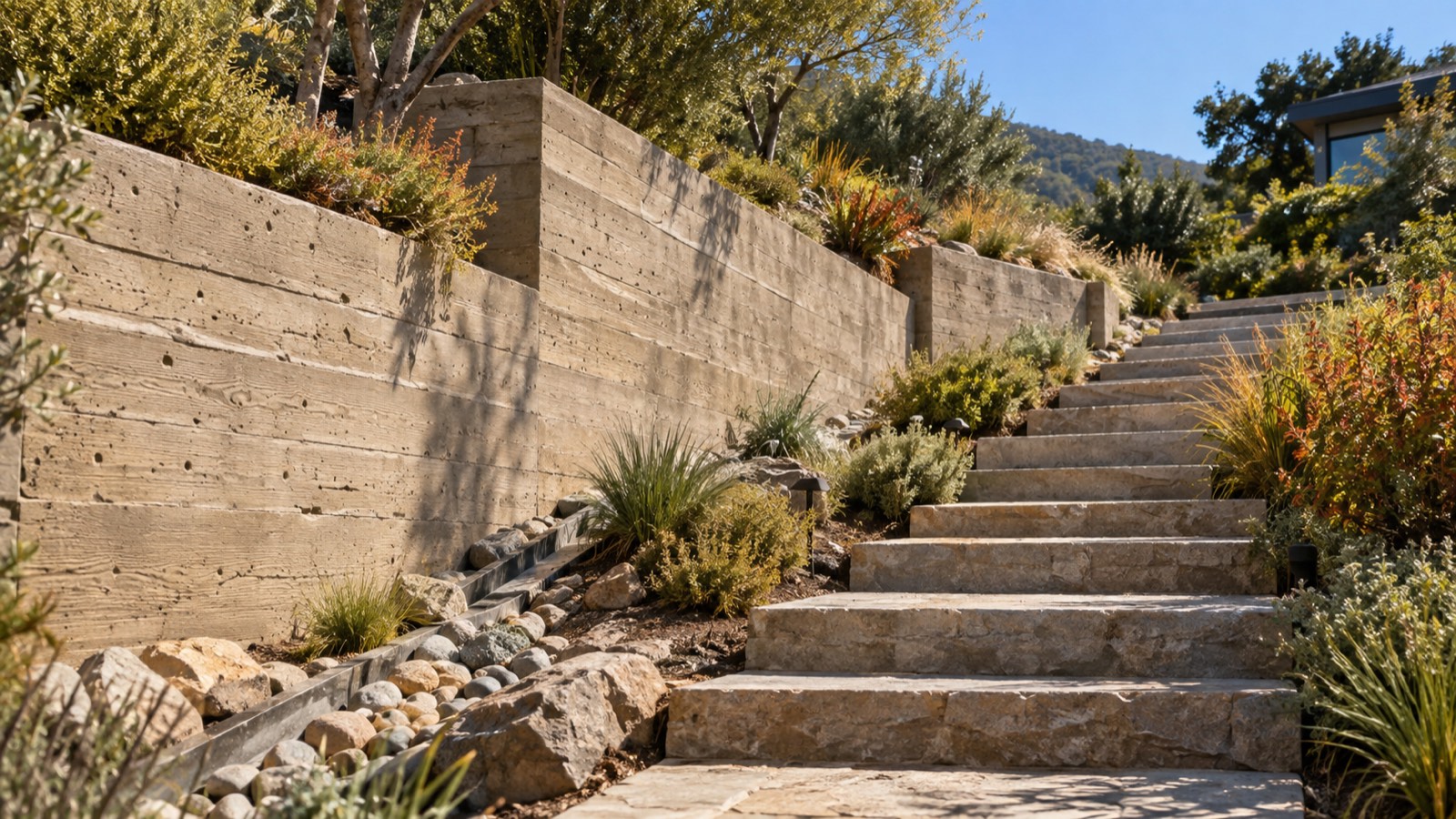
A view can hide a daily tradeoff
A hillside home can win you over from one window. Then the tour moves quickly, the view stays in your head, and the slope becomes something you plan to think about later.
Do not leave it for later. The slope affects how you enter the property, use the outdoor space, move things in and out, manage water, and reach areas that may need work. A retaining wall may also raise questions that cannot be answered by appearance alone.
At Crypton Realty, I want buyers to separate the part they love from the parts they still need to understand. Buying a Bay Area hillside home can make sense. The smart decision starts with a complete look at the property, not only the view.
Walk the property from the street upward
Start at the street and follow the route you would use on a normal day. Notice the driveway grade, turns, steps, handrails, gates, walkways, and the path from parking to the front door. Look at the same route while facing downhill. A path that feels simple on the way up may feel different when you are carrying something or the surface is wet.
Check where visitors, deliveries, trash bins, bicycles, and larger household items would travel. If the property has several levels, ask which areas connect directly and which require going outside or using stairs.
Come back for a focused second showing when access is allowed. The goal is not to invent a problem. It is to test the route after the first impression has settled.
Decide how much of the lot is usable for you
A large lot and usable outdoor space are not the same thing. Walk every area you are permitted to enter. Notice where you can stand comfortably, place outdoor furniture, garden, store equipment, or let a pet outside if those uses matter to you.
Look at how the terraces connect. A flat patio may work well, but the route to it may involve narrow stairs. A deep yard may have much of its area on a grade. A lower section may be hard to see from the house.
Write down what you expect to do outside. Then check the property against that list. The listing description cannot decide whether the lot fits your routine. Square footage cannot answer that question either.
Look at retaining walls without trying to diagnose them
Retaining walls deserve a slow visual review. Notice their location, height, material, and what sits above and below them. Look for visible leaning, bowing, wide openings, fresh patching, staining, soil movement, or areas where one section looks different from the rest.
Those observations are questions, not conclusions. A wall can look rough and still need only routine care. A clean surface does not prove what is behind it. Paint can also hide the material you need a professional to assess.
Take clear photos where the seller and showing rules permit it. Note the exact location of each concern. Ask a qualified inspector, engineer, contractor, or other appropriate professional what kind of review is needed for that specific wall. Your agent can organize the questions, but the condition opinion should come from the right expert.
Follow where water would travel
Water follows gravity, so a sloped property needs you to look uphill and downhill. Start at the roof. Follow gutters and downspouts. Look for drains, channels, swales, grates, pumps, or other features that appear to direct water. Notice where each one seems to end.
Then look beside the foundation, at the base of walls, along stairs, and at low points. Soil stains, mineral marks, moss, damp areas, erosion, or recently repaired surfaces may give you useful questions. A dry-day tour cannot show you how the property behaves during rain.
Compare what you see with the available reports and the disclosure package. If drainage matters to your decision, ask what can be verified and whether another inspection or specialist review is appropriate.
Ask for the records that can explain the work
Visible construction tells you only part of the story. Ask what records are available for retaining walls, grading, drainage, foundations, decks, stairs, or major repairs on the slope. Depending on the property, useful records might include permits, plans, invoices, inspection reports, engineering material, maintenance notes, or warranties.
Do not assume a record exists because the work looks recent. Do not assume missing paperwork proves the work is wrong. The next step is to identify what is available, what the local building department can confirm, and what a qualified professional still needs to evaluate.
Keep the questions tied to the decision. Who designed or performed the work? What area was addressed? What maintenance was recommended? Has the owner noticed movement or water in that location? A precise question is more useful than asking whether the whole hillside is fine.
Check whether future work can reach the problem area
Access changes the practical side of maintenance. Look at how a worker, ladder, material, or piece of equipment could reach the retaining wall, drainage feature, deck, fence, or planted slope. A repair location behind the house may be separated from the street by stairs, narrow gates, or finished interior space.
Notice whether neighboring property, shared access, an association, or a common area could be involved. Do not assume you can use someone else's driveway or move equipment through a shared space. The documents and the people with the right expertise need to answer those questions.
If a visible issue may need work, ask a contractor to consider access as part of the review. The condition and the route to reach it are separate parts of the same cost question.
Compare the tradeoff with similar homes
A slope is not automatically a reason to reject a home. It is a property feature with benefits, limits, and unanswered questions. One home may offer a view and less flat outdoor area. Another may offer a simple yard but less privacy or a different interior layout.
Compare homes within the same search instead of judging the slope in isolation. A hillside property in a San Mateo County home search should be compared with realistic alternatives in that search, not with a flat property that does not meet the rest of your needs.
Separate each concern into a fact you verified, a question that needs an expert, and a tradeoff only you can judge. That keeps an attractive view from erasing the hard questions. It also keeps an unfamiliar slope from becoming scarier than the evidence supports.
Turn the hillside tour into a clear decision
Before you leave, make a short record of access, usable outdoor areas, wall locations, water paths, visible changes, and missing records. Add the parts you could not reach or see. Your photos should help you point to a location, not prove a diagnosis.
Then match each open question to the right source. The seller and available documents can provide history. The local authority can confirm records it maintains. Inspectors and specialists can assess conditions within their expertise. Your insurance and lending professionals can answer questions that belong to them.
The broader guide to buying a Bay Area home and my buyer process use the same discipline. Understand the property before you decide what it is worth to you. If you are considering a hillside home, send me the address and your questions. I will help you plan the next review without pretending a quick tour answered everything.