2026-10-06 · 10 min read · Bay Area
What Should Bay Area Buyers Ask About a Foundation Inspection?
What should a buyer ask about a foundation inspection?
After a foundation inspection, ask what the inspector could see, what conditions were observed, what remains hidden, and whether a structural engineer or other specialist should evaluate a specific concern. Ask for the written report, photos tied to locations, and a clear explanation of any recommended next step. A crack, uneven floor, or past repair is a question to investigate, not a diagnosis you can make from a listing photo.
I am Kate Fomina, a broker at Crypton Realty in Alameda. I help buyers organize the inspection questions and contract dates. I do not determine structural safety or repair design. The person with the right technical license and access to the property should make those conclusions.
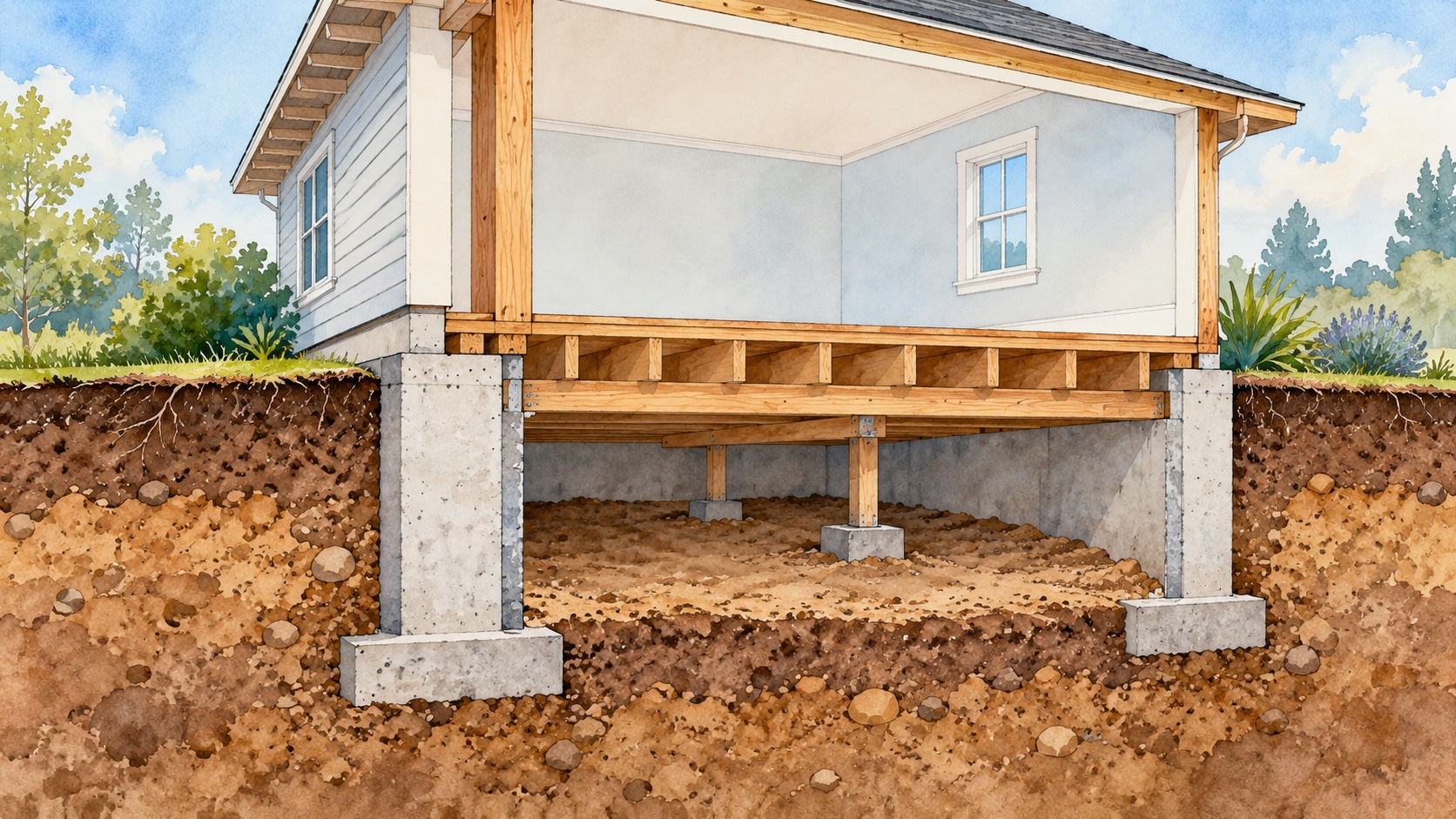
The image above is a fictional cutaway illustration. It is not an engineering plan, a real foundation, an inspection result, or a client property.
What can a general home inspection tell you?
A general home inspector can document visible conditions within the scope of that inspection and recommend more evaluation. Ask the inspector whether the foundation, crawlspace, basement, slab edge, retaining structures, and drainage were accessible and included. The answer will vary by property and contract. An inaccessible area should be recorded as a limit, not treated as a clean finding.
The National Association of Realtors home-inspection guide describes inspections as assessments of visible systems and structures and notes that structural or foundation concerns may require attention. The California DRE's buyer guidance encourages buyers to hire professionals to check the foundation and structural integrity of a home. Neither source makes a general inspector a structural engineer.
Ask what the inspector observed, not whether the house passed. A report may call for monitoring, repair, or specialist review, and those are different messages.
Which access limits should you write down?
Note where the inspector could not enter or see. Stored materials, low clearance, finishes, locked rooms, water, or unsafe conditions can limit an inspection. Do not remove materials or enter a crawlspace yourself to fill that gap. Ask the seller or agent whether safe access can be arranged for the right professional within the contract timeline.
Find out whether the observed foundation type changes what can be viewed. A slab may conceal conditions that a crawlspace would expose. A finished lower level may hide walls and framing. An inspector can describe the limits of the method used. If the area is important to your decision, ask which specialist can evaluate it and whether testing is needed.
My Bay Area buying guide places inspections alongside disclosures, financing, and the offer. An access limit is a real part of that decision, not a footnote to ignore.
How should you ask about cracks or movement?
Record the location, direction, approximate size, and whether a mark appears in more than one material. Ask the inspector what can be concluded from observation and what cannot. Do not label a crack cosmetic or structural from its appearance alone. A specialist may need measurements, history, or access behind finishes to evaluate it.
Ask whether doors or windows stick, floors slope, or walls show separation in the same part of the home. These observations may or may not share a cause. Bring the pattern to a structural engineer or qualified foundation specialist instead of connecting the dots yourself. If the seller has prior reports or repair invoices, give them to the specialist so they can compare documented history with current conditions.
Do not ask for a repair price before the cause and scope are understood. A number without a defined task is hard to use in an offer decision.
Why should drainage be part of the conversation?
Ask how water moves around the building. Look for visible grading, downspout discharge, standing water, staining, or a drainage system that needs maintenance. Do not redirect water, dig, or test buried systems during a showing. An inspector can identify observations and recommend a drainage or engineering specialist when needed.
The NAR inspection guide notes that improper drainage can damage a structure over time. That general point does not identify the cause of a condition at a specific property. Ask what evidence exists for this home: prior water reports, drainage work, contractor records, or recent observations during wet weather. A dry viewing day cannot prove the site stays dry in every season.
My hillside-home guide covers broader site questions for sloped properties. Foundation questions still need a property-specific professional review.
What do repair records and warranties prove?
Ask for invoices, permits when applicable, plans, engineering letters, photographs, warranty terms, and any final signoff connected to earlier foundation or drainage work. Read the stated scope. A receipt for one wall does not tell you what happened on the opposite side of the house. A warranty may have limits or transfer rules. Ask the issuer rather than assuming it follows the property.
Compare dates. Was a report prepared before or after the repair? Was any follow-up evaluation completed? Ask the current inspector or engineer whether the earlier document answers today's question. An older report can be valuable history, but it cannot describe conditions that changed later.
If paperwork is missing, record the gap. Missing records do not automatically establish poor work. They do leave a question that may need the contractor, permitting office, engineer, or attorney to answer.
When should you request a structural engineer?
Ask for a specialist when a general inspector recommends one, when visible conditions raise a material question about support or movement, or when a past repair has an unclear scope. Explain the question you need answered. A useful assignment may ask the engineer to review specific areas, available reports, visible conditions, and possible next investigation. Ask what the written deliverable will include.
Check the professional's qualifications and whether the proposed visit includes the areas of concern. A contractor's estimate and an engineer's assessment answer different questions. A contractor may price defined work. An engineer can evaluate structure and recommend a design within their scope. Some situations need both.
Do not assume a verbal reassurance from a showing or a text message settles the matter. Preserve the written findings and ask follow-up questions while you still have decision time under the contract.
How do seismic questions fit without making assumptions?
In the Bay Area, buyers may see references to foundation anchoring, bracing, or earlier seismic work. Ask what was installed, when, by whom, and which records exist. Do not infer retrofit status from a visible bolt or a seller's general description. A qualified professional can compare a specific building's construction and documentation with current questions.
The California DRE's real-property disclosure publication discusses earthquake-safety information and certain structural conditions that may be disclosed when known. It does not certify a particular home. Read the seller's forms and any retrofit records. Ask an engineer about structural significance and an insurer about coverage.
My Pre-Offer Five keeps condition, documents, financing, price, and timing visible together. A seismic document belongs in both the condition and document review.
How should you read the specialist's report?
Find the purpose and scope first. What areas were examined? What data or records were used? Which observations support the conclusion? What could not be inspected? Then read the recommended action and any alternative. Ask whether the report calls for additional testing, a repair design, monitoring, or no action within its stated scope.
If the recommendation is technical, ask the author to explain it in plain language. If work is proposed, ask who should prepare the plans, secure required approvals, perform the work, and verify completion. A written finding that identifies a concern may not include a price. A bid may not include hidden conditions. Do not merge the two into a guaranteed total.
Keep the report with the disclosure package. The buyer's lender or insurer may have separate questions. Ask them directly, rather than treating an engineer's report as automatic financing or coverage approval.
How can you use the findings in an offer decision?
Put the facts on one page: the observed condition, inspector's access limits, specialist conclusion, work scope if defined, estimate source, financing or insurance question, and contract deadline. Mark each unknown. Decide what you need resolved before you can move forward. Some buyers request more inspection time, a documented repair, a price change, or a credit. The written agreement controls what is available.
Do not assume a seller will complete work or that a lender will accept a credit. Ask your agent to explain the contract options and ask the responsible professionals about the work. If the issue could affect a legal right or deadline, involve a real estate attorney. The goal is a decision you understand, not an agent's guess that everything will probably be fine.
For a property in Contra Costa County, my Contra Costa County buying page gives the broader search and offer process. The foundation review remains specific to the building.
Which common foundation-review mistakes should buyers avoid?
Do not treat a visual mark as a diagnosis. Ask a qualified professional what it means in context.
Do not ignore an inaccessible area. Decide whether specialist access is possible before the deadline.
Do not rely on an old invoice alone. Match the repair scope and date with current observations.
Do not price work before defining it. Separate an engineer's question from a contractor's estimate.
Do not assume a retrofit label proves safety. Review the records and ask the right professional what was actually done.
Do not forget water pathways. Ask about visible drainage observations and past water records.
Does a crack mean the house is unsafe?
No general answer follows from the word crack. Some marks may be limited, while others may point to movement or another condition. Location, history, materials, and related observations matter. Ask a qualified inspector or structural engineer for a property-specific assessment. Do not make a safety conclusion from a photograph or this article.
Can a repair estimate replace an engineering assessment?
No. A repair estimate prices the work described by the bidder. It may not establish the cause, full scope, or structural adequacy of a proposed solution. Ask whether an engineer should define or review the repair. If a bid excludes hidden damage or permits, keep those limits visible in your decision.
What should you do next?
Request the general report, list visible findings and access limits, collect repair and retrofit records, and ask a qualified specialist to answer the material structural question. Put the contract deadline beside the expected report date. If the answer affects your loan, insurance, or planned use, ask those professionals directly. Keep every conclusion tied to the written evidence.
I help buyers coordinate those questions within an offer timeline. Read how I guide a home search and contact me about a home you are considering. This is general information, not structural, engineering, construction, legal, lending, insurance, or tax advice. The qualified professionals and signed documents control the details.