2026-09-18 · 8 min read · Bay Area
Water Heater Checklist for Bay Area Home Buyers
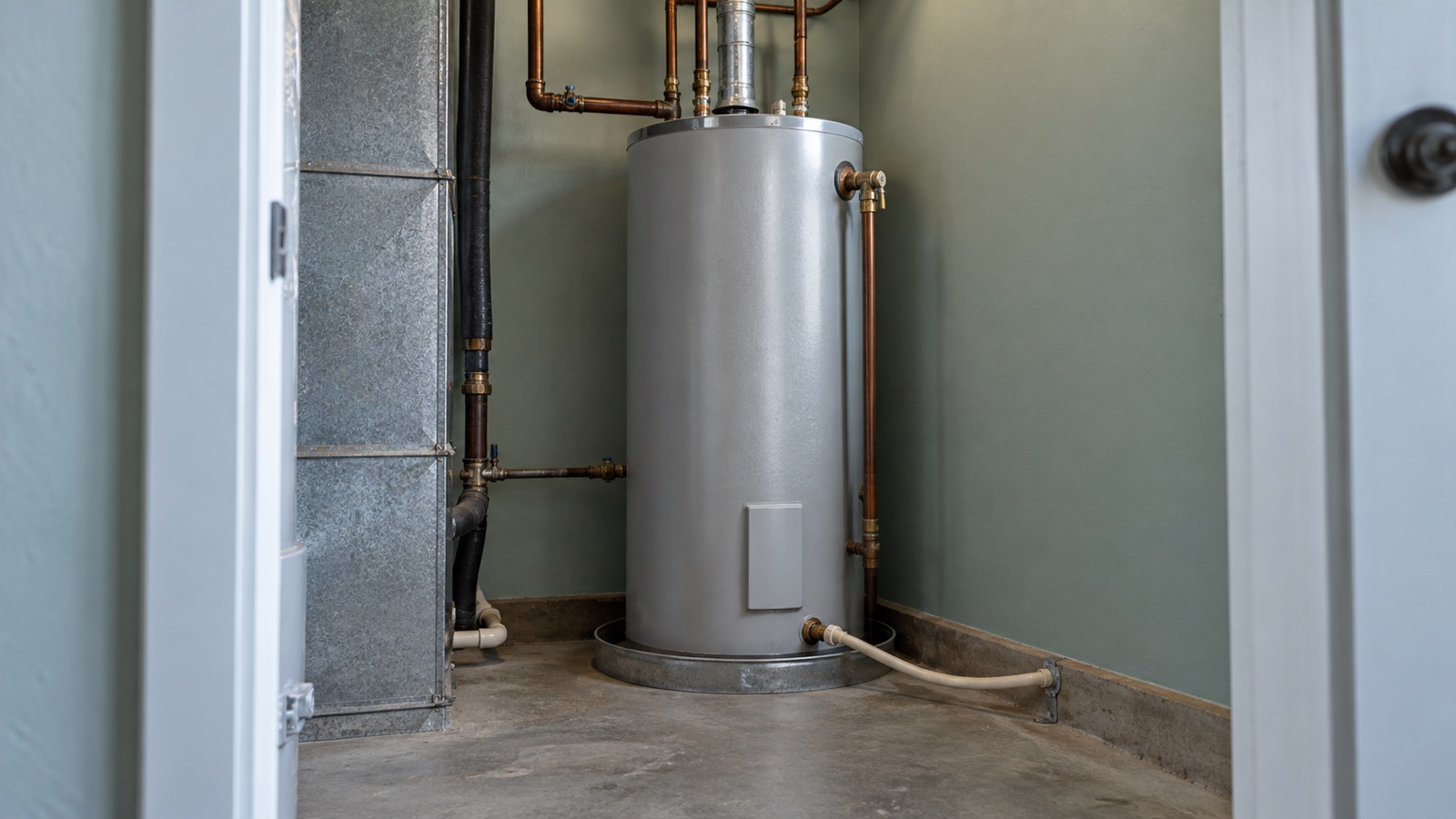
A small utility space can raise big questions
A water heater is easy to miss during a home tour. It may sit behind a door, inside a garage cabinet, in a utility room, outside the living area, or in a shared part of a building. Buyers often glance at it and move on.
This water heater checklist for Bay Area home buyers helps you slow down without trying to become a plumber. Your job is to identify the setup, notice visible conditions, and learn what still needs a qualified answer.
At Crypton Realty, I want buyers to connect a home's systems to daily life and future plans. A neat cabinet does not prove that the equipment works well. An older-looking unit does not tell you the full condition either. Start with facts.
Identify what serves the home
First, find out whether the home has an individual water heater, more than one unit, or a shared system. Look for the equipment location and ask what parts of the property it serves. A detached space, addition, or separate living area may have a different setup.
Notice whether the unit appears to use a storage tank, heats water without a tank, or connects to a central building system. Do not guess from one pipe or from the shape of a cabinet. The listing information, disclosures, association records, inspection, and equipment label may answer different parts of the question.
Write down the system type only when the available information supports it. If the answer is unclear, keep it on the question list. My guide to reading a disclosure package can help you trace short notes back to the records that explain them.
Location changes the practical decision
The water heater's location affects access, sound, storage, and future service. Stand back and look at the whole space. Can you see the front of the unit? Is the area blocked by shelves, stored items, laundry equipment, or built-in finishes?
Do not assume equipment can be removed through the opening you see. Cabinets, stairs, narrow turns, and nearby appliances can change the work. A replacement may need a different plan than the current installation.
Equipment near a bedroom, office, or main living area may deserve a sound check. Equipment inside a garage or exterior closet may compete with storage. No location is automatically wrong. You need to understand what comes with it.
Trace the visible water path
Look around the base of the unit and the nearby surfaces without touching or moving anything. Notice a drain pan if one is present, visible drain lines, shutoff points, pipe connections, wall openings, and the floor below.
Watch for active moisture, dried staining, mineral buildup, corrosion, patched surfaces, swollen trim, peeling finish, or a floor that looks different close to the equipment. These observations do not tell you the cause. Water could come from the heater, another pipe, condensation, a past event, or something outside the utility space.
Use precise notes. Write staining below the front connection instead of leaking water heater unless someone qualified has confirmed a leak. This keeps a visible clue from turning into a diagnosis. It also gives your inspector a clear location to review.
Do not judge fuel or venting by appearance
A water heater may use gas, electricity, a heat pump, or another arrangement. Some systems have visible venting or air openings. Others connect to parts you cannot see. A quick tour cannot confirm that a setup is safe, efficient, or compliant.
Ask a qualified professional to explain the energy source, exhaust or air needs when applicable, access limits, and any recommendation for another review.
Do not remove covers, test shutoffs, adjust controls, or enter a restricted utility area. If a closet is locked or blocked, record the access limit. A clean exterior cannot answer what the inspection could not reach.
Ask about hot water performance in plain language
Equipment can be present and still be a poor fit for how you expect to use the home. Ask what is known about the hot water supply and whether records describe service or recurring concerns.
If operation is allowed, follow the instructions of your agent and inspector. Do not turn on fixtures, equipment, or controls without permission. Hot water at one fixture does not prove performance across every bathroom, appliance, and period of use.
A distant bathroom, added space, or separate level may raise questions about wait time or consistency. General promises about a system type cannot replace a review of the specific setup.
Read service records without filling the gaps
Available records may include disclosures, inspection notes, invoices, permits, warranties, or association documents. Read the scope. Maintenance, a repair, a part replacement, and complete replacement are different events.
Compare the date, location, and description with the unit you saw. An invoice can show billed work, but it may not explain every condition around the equipment. Read warranty terms instead of assuming they apply.
If photography is permitted, take a clear photo of the equipment label for your records. A professional may use it to identify the unit, but the label cannot answer every question about the installation or current performance.
Shared buildings need a second layer of questions
Condos, townhouses, and multi-unit buildings may use individual equipment, shared equipment, or a mix. The unit's location does not always tell you who owns, maintains, or pays for the connected system.
Review the documents that apply to the property. Ask what equipment serves the unit, where it is located, who can access it, who handles maintenance, and what records are available. If a project or repair is mentioned, ask what written information supports that statement.
Do not rely on a casual answer in a hallway or at an open house. Responsibility can depend on the governing documents and the exact parts involved. Put unanswered shared-system questions next to your other condo review items before you make a decision.
Read what the inspection did not cover
An inspection report should tell you what was observed and where access stopped. Stored belongings, locked doors, finished cabinets, unsafe conditions, active operation, and concealed connections can limit the review.
Read the method and the limitations, not only the summary. Was the equipment operated? Were all connected areas visible? Did the inspector note moisture, corrosion, venting, drainage, access, or the need for another professional? Bring unclear wording back to the inspector.
The same discipline applies to the rest of the property. Use the roof checklist for Bay Area buyers and the laundry room checklist to separate visible facts from areas that still need review.
Turn the findings into a home decision
Sort your notes into confirmed facts, open questions, and possible future work. Confirmed facts come from the property, the records, or a qualified professional. Open questions need better access, another document, or a clearer explanation. Possible future work needs a property-specific scope before it belongs in your budget.
Do not let one stained fitting turn into a worst-case story. Do not let a polished utility closet erase the need to ask questions. Both reactions replace information with emotion.
Bring the water heater notes back into the full home review. Compare them with plumbing, electrical service, drainage, storage, planned remodeling, and the limits of every report. The second showing checklist gives you a broader structure for that comparison.
Use the same checklist at every home
A useful water heater review is simple. Identify the setup. Look at location and access. Trace visible water paths. Read the service records. Understand the inspection limits. Then ask a qualified person to answer what you cannot.
The checklist stays the same, but the answer will change by home. A detached house, condo, older remodel, recent addition, and shared building can each put the equipment in a different context. The property should control the advice.
Read how I approach buying a home in the Bay Area, review the local guide for buying in Alameda County, and see my Bay Area buyer process. If you want help organizing the reports and questions for a home you are considering, send me the property and what you already know. We will identify the facts and the gaps before you decide.