2026-10-08 · 10 min read · Bay Area
How Can Buyers Check Drainage Around a Bay Area Home?
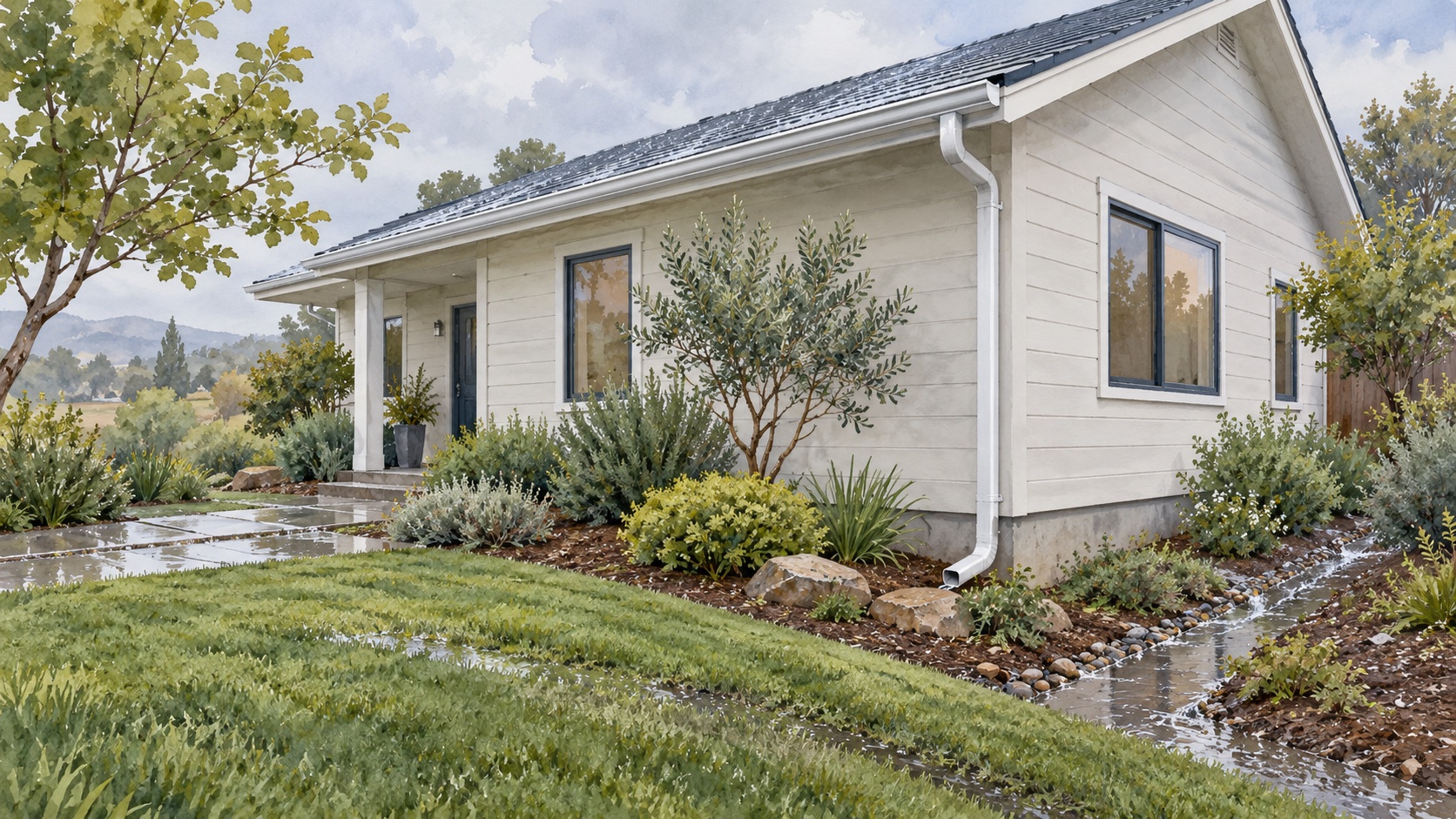
How can buyers check drainage around a home?
Walk the outside of the property with your inspector and trace where roof and surface water appear to go. Note the gutters, downspouts, visible grading, drain openings, paved areas, retaining structures, and any signs of past water. Ask what was actually observed, which areas could not be checked, and whether a drainage, geotechnical, structural, or other qualified specialist should investigate a specific concern. A dry day is one observation, not proof of performance during rain.
I am Kate Fomina, a broker at Crypton Realty in Alameda. I help buyers gather the records and questions that belong in an offer decision. I do not diagnose drainage systems or design repairs. The property and the professional inspection should drive the conclusion.
The image above is a fictional illustration. It is not a real home, inspection finding, drainage design, or client property.
Why does drainage belong in a buyer's inspection plan?
Water can affect many parts of a property, from surface paths to concealed materials. The National Association of Realtors home-inspection guide lists improper drainage among issues inspectors may flag because it can damage a structure over time. That is a general reason to investigate, not a finding about any particular home.
Set a question before the inspection: where does water from the roof, paving, and higher ground travel, and what evidence shows whether that route works? Ask the inspector to describe accessible systems and limits. Roof drains, surface channels, buried pipes, pumps, and neighboring land may require different expertise. A single inspection may not see an underground line, concealed leak, or storm behavior.
My Bay Area buying guide explains how condition, documents, financing, and timing fit together. Drainage may touch several of those at once. Bring the question into the review early enough to obtain a qualified answer before the contract deadline.
What can you see during an ordinary property visit?
Observe without altering the site. Look for downspouts that end near the building, gutters with visible damage, low spots in paved areas, soil or mulch built up against siding, staining near lower walls, damp-looking crawlspace openings, and drains that appear blocked. These are prompts for an inspector, not proof that a system has failed. Note the location and take photographs only as permitted by the seller and showing rules.
Walk the perimeter where access is allowed. A fence, dense planting, locked side yard, or steep grade may hide part of the water path. Do not enter a crawlspace, remove a cover, climb a roof, or test a buried line on your own. Ask the agent to arrange appropriate professional access if the hidden area matters to your decision.
Weather changes what you can observe. A sunny visit may show the layout but not runoff. A rainy visit may show water moving, yet a single storm may not answer what happens in every season. Keep that limit in your notes.
How do roof gutters and downspouts fit the picture?
Start at the roof edge. Ask the inspector which gutters and downspouts were visible, whether they appear continuous, and where they discharge. A downspout may feed an above-ground extension, a visible channel, or a buried connection. Do not assume that a pipe entering soil reaches a functioning outlet. The inspector may recommend a specialized evaluation or a controlled test if the destination is unclear.
Look for staining or erosion where water appears to leave a downspout. Ask about maintenance and earlier overflow reports. A recently cleaned gutter can still have an undersized, disconnected, or poorly directed system. The NAR guide to home-inspection areas includes roof drainage systems, gutters, downspouts, and surface drainage among items an inspector may examine.
My roof checklist covers the roof surface and related records. Keep the roof and ground-water questions connected in your notes, while letting the inspector describe their distinct scopes.
What should you ask about grading and hard surfaces?
Ask how the ground and paving direct water. The visible slope of a yard, driveway, patio, or walkway can suggest a route, but appearance alone does not measure performance. Look for low points, ponding marks, sediment, patched paving, or a drain at the bottom of a slope. Ask who maintains it and where it connects.
Do not assume a drain is active because a grate is present. A specialist may need access or testing to identify its condition and destination. A plan, invoice, or permit may describe installation, but the current system still deserves examination. If runoff appears to cross a boundary, ask about recorded rights, maintenance responsibility, and any known history. A surveyor, attorney, drainage professional, or local agency may need to answer different parts of that question.
Keep your inquiry tied to the parcel. A general statement about a neighborhood's weather does not tell you what happens at this property when water reaches its lower areas.
How should you look at basements and crawlspaces?
Ask the inspector whether the basement, crawlspace, slab edge, and lower walls were accessible. Look for described stains, odors, visible mineral deposits, damp materials, standing water, or past patching. Do not identify a cause or a hazard from one mark. Water could come from more than one path, and a dry surface does not prove there was never a problem.
Request photographs with locations and dates when the report identifies a concern. Ask whether moisture readings, further access, or a specialist evaluation would help. Do not treat a dehumidifier, sump pump, or waterproofing label as evidence of a complete solution. Ask what was installed, who maintains it, and what records exist.
The California DRE real-property disclosure publication shows that the Transfer Disclosure Statement asks about known flooding, drainage, and grading problems. Review the seller's answers and supporting records, then ask an appropriate professional about unanswered condition questions. A disclosure form is part of the evidence, not an inspection substitute.
When does a hillside call for more specialized review?
On a sloped property, note where water arrives from higher ground, where it leaves, and whether it runs toward a cut, fill, retaining wall, or steep soil area. Do not infer slope stability from a landscaped surface. A U.S. Geological Survey fact sheet advises watching where stormwater converges on hillsides because blocked drainage or diversions can increase landslide potential. This broad science cannot predict the condition or risk of a specific parcel.
If an inspector or document raises a slope question, ask a qualified geotechnical engineer, engineering geologist, or other appropriate specialist what information they need and what they can conclude. Prior geotechnical reports, drainage plans, retaining-wall records, and repair invoices may be relevant. Ask how old they are and whether the site has changed since they were prepared.
My hillside-home guide covers the broader document and specialist review. This drainage checklist is one part of it.
Which seller records help answer drainage questions?
Request known reports, plans, permits when applicable, invoices, warranties, drainage service records, insurance claim information the seller chooses or is required to disclose, and dates of prior water events. The disclosure-package guide explains how to compare forms with attachments. For drainage, match each paper to a location and a question. A receipt for clearing one line does not document every line on the lot.
Ask whether the records describe an observation, a proposed design, completed work, or final verification. Those are different stages. If a report says further evaluation was recommended, look for the follow-up. If a buried system was installed years ago, ask who has maintained it and whether its outlet is known. Missing paperwork should be marked as unknown rather than converted into an assumption.
Read seller answers carefully but keep the property inspection independent. The seller may not know every concealed condition. A professional can explain which gaps merit another investigation within your available time.
Should you test a drain or wait for rain?
Ask the inspector or drainage specialist which test, if any, is appropriate and permitted. Pouring water into an unknown pipe, flooding a yard, lifting a grate, or redirecting runoff can create problems and may violate access limits. The professional should define the method, safe conditions, seller permission, and what a result would mean. A clear flow at one opening may not establish the condition of every hidden segment.
If a storm occurs before the decision deadline, an agreed visit may provide useful observation. Record the date and location, then have a qualified person interpret it. If there is no rain, do not invent a forecast-based conclusion. Use the visible layout, report limits, historical records, and specialist advice. A plan that relies on waiting for the perfect storm may run past the contract date.
Ask whether the seller has photos from past weather. Verify the date and part of the property shown. A photograph can document an event, but it may not reveal the cause or full extent.
How do you evaluate a proposed drainage repair?
Define the problem before pricing a solution. Ask the responsible professional what observations support the proposed work, which areas are included, whether buried conditions are unknown, and what permits or approvals may be needed. Compare a drainage contractor's scope with any engineer's design or recommendation. Neither document should be summarized as a guarantee beyond its stated limits.
Ask how the work will be verified and maintained. A bid may cover installation but not restoration of paving or landscaping. It may exclude hidden damage or work on adjoining property. Put those exclusions beside the price. If a seller proposes a credit or repair, ask your agent about the written agreement and ask your lender or insurer about any requirements within their scope.
Do not assume the cheapest visible fix addresses the source. Moving a downspout may be one task, while soil movement, foundation conditions, or a concealed line may require different analysis. Let the qualified professional connect the work to the evidence.
How should drainage findings affect your offer decision?
Write a short decision note with four columns: what you observed, what the documents say, what remains unknown, and who can answer it before the deadline. Include the inspection access limits, any specialist recommendation, work scope, estimated cost source, and contract date. Distinguish a repair you can plan from a condition whose cause or responsibility is still open.
My Marin County buying page covers the broader search and offer process. A drainage question still needs a parcel-specific answer. If a concern affects financing, insurance, easements, or legal responsibility, ask those professionals directly. Your agent can coordinate the questions but should not issue a technical or legal conclusion.
Give yourself room to decide. You may request further inspection, negotiate a documented response, or decline to move forward under the choices available in the signed agreement. Do not equate the presence of a drain with a completed investigation.
Which common drainage-review mistakes should buyers avoid?
Do not treat a dry viewing day as a clean drainage finding. Compare records and professional observations.
Do not assume a buried pipe has a known outlet. Ask for plans or a specialist's evaluation.
Do not make a flood or slope conclusion from a general map alone. The parcel and its systems need their own review.
Do not ignore an inaccessible side yard or crawlspace. Mark the limit and ask whether safe professional access can be arranged.
Do not equate a contractor's bid with an engineer's diagnosis. Read each scope separately.
Do not miss the contract deadline while waiting for another opinion. Put the expected report date beside the decision date.
Can a home inspector certify that drainage will work in future storms?
No ordinary visual inspection can promise future performance in every storm. Ask what was visible, what was tested, and which conditions were outside the scope. A drainage specialist may be able to investigate a defined system or site concern, but the written report should state its own limits. Use those limits in your decision rather than asking for an impossible guarantee.
Does a French drain prove the yard has no water problem?
No. A named drainage feature describes an intended method, not current condition or effectiveness. Ask when it was installed, what area it serves, where it discharges, whether it has been maintained, and what professional records exist. A specialist can assess the particular installation and whether additional investigation is needed. Do not infer performance from the label alone.
What should you do next?
Bring the inspection report, seller disclosures, visible water-path notes, and any drainage plans into one file. List the unanswered questions and assign each to the right professional. Arrange access or testing with permission, confirm the report date, and compare the findings with your contract deadline. Keep the property-specific evidence ahead of general assumptions.
I help buyers organize those questions within a complete offer review. Read how I guide a home search and contact me about a property you are considering. This is general information, not drainage, engineering, geologic, inspection, legal, lending, insurance, or tax advice. The qualified professionals and signed documents control the details.