2026-09-15 · 8 min read · Bay Area
Laundry Room Checklist for Bay Area Home Buyers
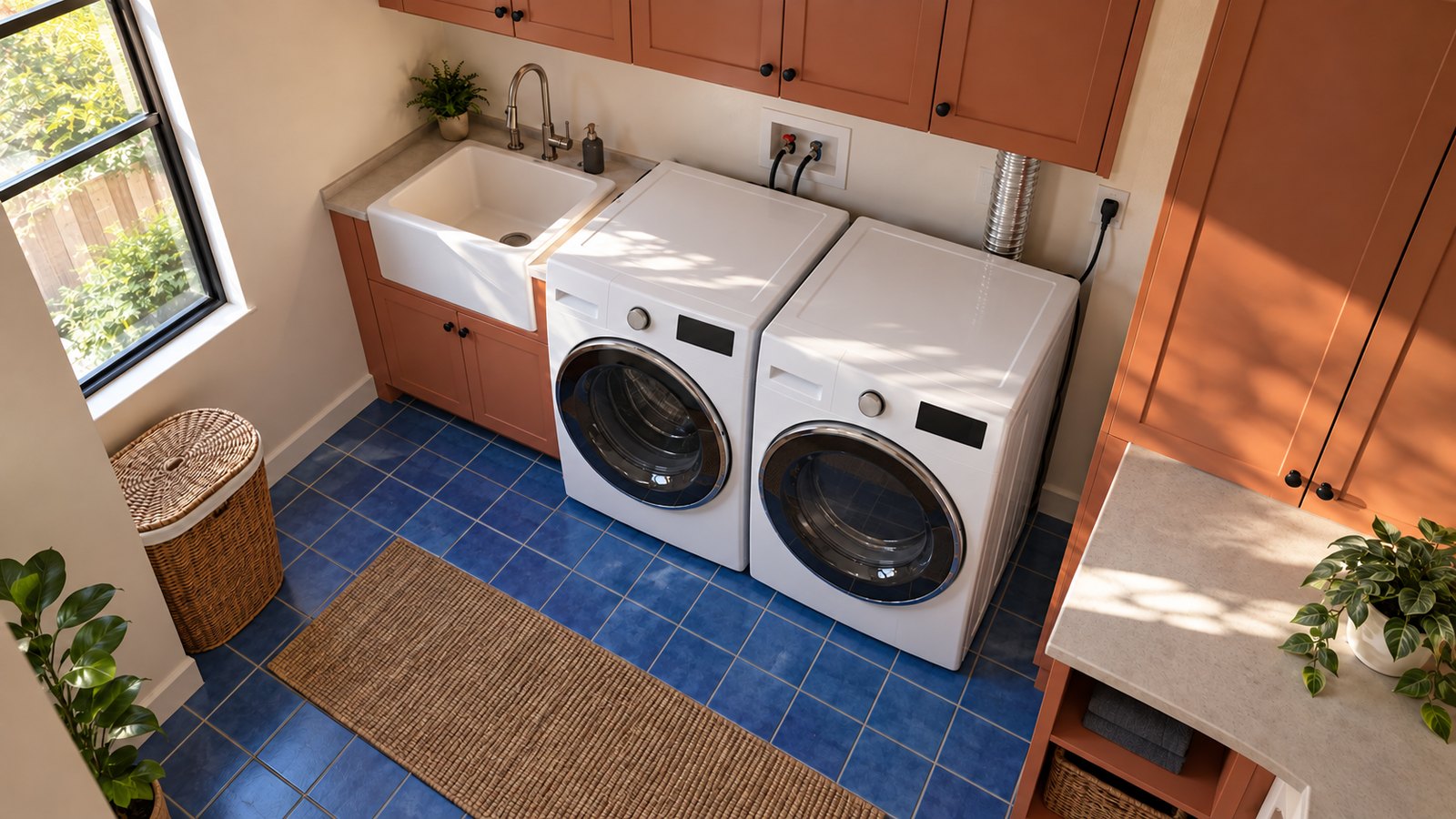
A laundry area is part of the floor plan
The laundry space rarely gets the same attention as the kitchen, living room, or main bedroom. You may see a washer and dryer in a listing photo, register that the home has laundry, and move on.
That quick glance misses the useful questions. Where is the laundry area? Can your machines fit? Can you open the appliance doors and still move through the space? Where does heat, moisture, vibration, and sound go? What does the route from the bedrooms ask you to carry and climb?
This laundry room checklist helps Bay Area buyers judge the setup as part of the home. At Crypton Realty, I want you to notice the daily details before another room pulls your attention away.
Start with location and the route to it
Walk from the bedrooms to the laundry area as if you were carrying a full basket. Then walk from the machines to the place where you would fold or store clean clothes. Notice stairs, narrow turns, low doorways, exterior steps, and doors along the route.
A laundry closet beside the bedrooms may put sound close to rooms where you sleep or work. Machines in a garage or lower level may add distance and stairs. Neither setup is automatically better. The answer depends on your routine.
Add this route to the broader second showing checklist. A floor plan makes more sense when you test a real task instead of admiring each room separately.
Check the usable space, not the empty opening
Measure the opening and the space inside it if showing rules allow. Bring the dimensions of any machines you plan to use. Record width, depth, and height, then look for hoses, valves, trim, shelves, and baseboards that reduce the usable area.
Check whether the room, closet, appliance, and cabinet doors can open without blocking one another. Stand where you would load and unload the machines. A unit may fit while leaving too little room to use or service it.
Look at the path into the home too. Tight stairs, landings, hall turns, gates, elevators, and door frames can matter as much as the final opening. Measure the narrow points rather than estimating from a photo.
Identify each connection without guessing at condition
Look for the visible water supply, drain, power connection, and dryer setup. Note gas equipment if present. Do not disconnect a hose, move a machine, open a service panel, or run equipment without permission.
Your job during the tour is to make an inventory. A qualified inspector or other appropriate professional can evaluate condition, installation, and safety. Ask what is present, what could not be seen, and what needs another specialist.
Notice whether the connections are easy to reach. A valve behind a machine or a vent route inside a finished wall may be hard to evaluate. Limited access is not proof of a defect. It is a limit on the information you have.
Look around the machines for moisture clues
Scan the floor, baseboards, wall edges, cabinet bottoms, ceiling below the laundry area, and the surfaces around supply and drain points. Note staining, swelling, peeling finishes, corrosion, patched material, damaged flooring, or an unusual odor.
These observations are clues, not diagnoses. A mark may be old, repaired, active, or unrelated to the laundry equipment. Do not name the cause from a quick look. Photograph the condition if permitted, ask what is known, review the property information you receive, and give the question to the right professional.
Also check whether stored items or a fitted shelf block your view. A clean room can still have hidden areas. Ask what the inspector could access and what remained concealed instead of treating a neat surface as a complete answer.
Listen for the effect on nearby rooms
Stand in the rooms that share a wall, floor, or ceiling with the laundry area. Notice whether those spaces would be used for sleep, work, conversation, or quiet time. The position of the machines may matter more to you than the finish of the laundry room itself.
If testing is allowed and the equipment is available to operate, ask before turning anything on. A short cycle cannot tell you everything about performance or installation. It can help you understand sound and vibration in the surrounding rooms.
Compare this check with the guide to noise before buying a Bay Area home. Street sound, shared walls, mechanical equipment, and laundry noise can affect different parts of the home at different times.
Treat a shared laundry room as part of the buying decision
A condo or other shared building may place laundry outside the unit. Walk the full route if access is available. Check the stairs, elevator, hallway, doors, lighting, machine area, folding surface, and the distance back to the home.
Read the association material you receive for information about access, maintenance, payment, operating rules, and planned work. Turn each missing answer into a question. Do not assume a room is available at every hour or that visible equipment belongs to the unit owner.
A buyer comparing homes in San Francisco with homes in Alameda County should judge the actual route and documents for each property.
Confirm what belongs to the home
An appliance shown in a photo may shape your impression of the space, but the photo does not tell you what is included in a sale. Ask your agent to confirm the written terms and property information for the specific home. Do not build your budget around an assumption.
If you would replace the machines, check whether the space can accept the size and type you want. Ask a qualified professional what changes would be needed for different equipment. Cabinets, doors, venting, drains, electrical service, gas connections, association rules, and permit requirements can limit what is practical.
Separate the visible setup from a future project. One is part of the home you are evaluating now. The other needs a scope, cost, permission check, and professional advice before it belongs in your decision.
Separate fixable details from fixed tradeoffs
A removable shelf, different door swing, or new storage plan may be a manageable change if the work is allowed. The room's location, stair route, shared walls, basic dimensions, and position inside the building are harder to change.
Make two lists. Put possible changes in one list and fixed tradeoffs in the other. Then add a question beside every change that still needs a cost, approval, or professional opinion. This prevents a simple storage issue from becoming a reason to reject the home. It also prevents a difficult daily route from disappearing because the machines look new.
The guide to buying a Bay Area home uses the same discipline. Condition, cost, and daily fit need separate answers before they become one decision.
Record the laundry check before you compare homes
Before you leave, record the laundry location, route, usable dimensions, door clearances, visible connections, nearby rooms, moisture clues, storage, ventilation questions, and anything an inspector needs to examine. Add photos if they are allowed.
Use the same short format for every property. One home may offer a convenient location with more sound near a bedroom. Another may put laundry farther away but give you better separation and service access. The notes help you compare the tradeoff instead of choosing whichever room looked cleaner.
My buyer process is built around making small practical questions visible before they become expensive surprises. If you are comparing homes and the utility spaces are hard to judge, send me the listings you are considering. I will help you plan what to check at the next tour.