2026-09-27 · 8 min read · Bay Area
Garage Checklist for Bay Area Home Buyers: What to Check Before You Buy
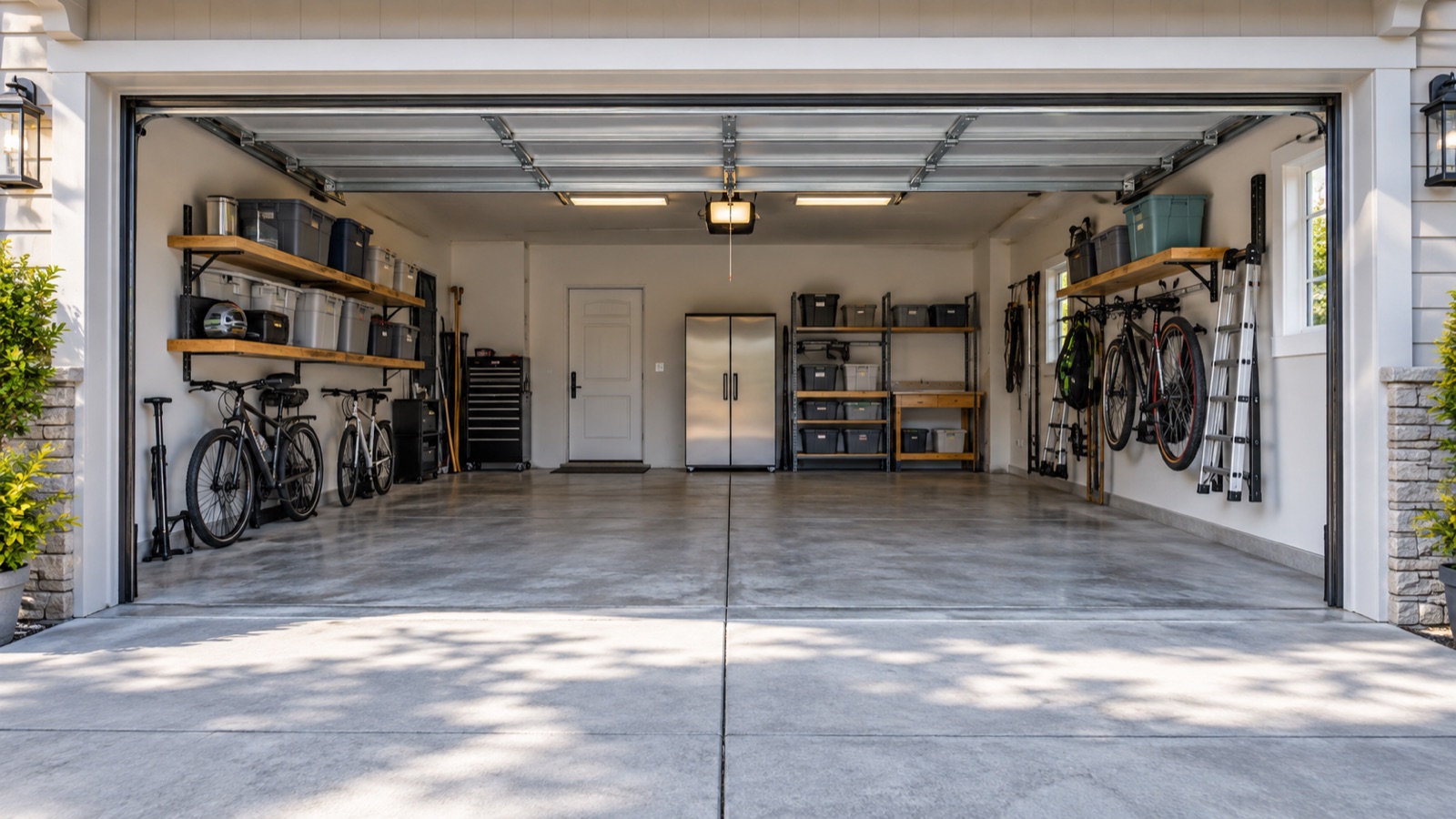
A garage label does not tell you how the space works
A listing may call a space a two-car garage. That description does not tell you whether your vehicles fit comfortably, whether the doors can open, where bicycles or bins would go, or whether the route from the street works for you.
This garage checklist for home buyers helps you examine the space as part of the home instead of treating it as a box on the feature list. You are checking four things at once: parking, access, storage, and the visible condition of the space.
At Crypton Realty, I want buyers to test the way a space will function before they assign value to it. A clean garage can still be awkward. A plain garage can work well. The difference is in the details you verify.
Start with your vehicles and actual dimensions
Begin with the vehicles you use now, not a general idea of what should fit. Know their length and width, then account for mirrors, open doors, the garage door opening, posts, steps, cabinets, water equipment, and anything else that takes space away from the parking bay.
If the garage is empty, use a tape measure with permission. Measure the clear width and depth of each usable bay. Then look at the space left for getting out of the vehicle and moving around it. A vehicle that technically fits may still leave no comfortable route to the house door, storage, or side wall.
If the garage is occupied, do not move the seller's property. Note the points you cannot see and ask for another way to confirm them. A stated garage size is useful, but your own use depends on the clear space that remains after fixed equipment and storage are counted.
Follow the full route from the street to the parking bay
The garage begins before the door. Look at the driveway approach, curb cut, slope, width, turning room, and any tight angle between the street and the opening. Notice whether a parked vehicle, gate, column, wall, or landscaping changes the path.
Think through the movement in both directions. Can you enter without a difficult turn? Can you back out with a clear view? Would another vehicle in the driveway change access to the garage? If tandem parking is involved, decide whether moving one vehicle to reach another fits your daily routine.
Use the separate guide to checking parking at a Bay Area home for the street, guest, and shared-access questions. The garage is one part of the parking plan, not the entire answer.
Look at the garage door without turning the showing into a test lab
Observe the door panels, tracks, rollers, springs, cables, opener, ceiling mounts, and the bottom edge from a safe distance. Look for bent pieces, loose-looking hardware, uneven gaps, damaged weather seals, or marks that suggest the door has rubbed or struck something.
Do not touch springs, cables, tracks, or moving parts. They are not a buyer do-it-yourself test. If the seller permits the door to operate during the showing, watch and listen from a clear position. Note jerking, hesitation, scraping, a door that appears uneven, or an opener that strains.
A smooth opening during one visit does not replace a qualified evaluation. It gives you a better question for the inspector or garage-door professional. Write down what you observed instead of naming a cause.
Read the floor, walls, and ceiling as a set of questions
Garages show wear. The useful task is to separate ordinary marks from conditions that need a closer look. Scan the floor for cracks, uneven areas, patches, staining, flaking coatings, and places where water or debris appears to collect.
Look at the base of walls, corners, ceiling, and the area around doors and windows. Note discoloration, damaged finishes, gaps, visible repairs, or material that looks different from the surrounding surface. If the garage sits below living space or against a slope, pay attention to those shared surfaces without trying to diagnose them.
Do not taste, smell closely, scrape, or touch an unknown substance. Do not decide that a stain is harmless or serious from appearance alone. Photograph it if the showing rules allow, mark the location, and ask the right professional to evaluate it.
Separate parking space from storage space
Shelves can make a garage look organized while hiding how much room they take from the vehicles. Empty walls can make it look generous even when bicycles, seasonal items, tools, and trash bins will use the remaining space.
List what you expect to store and where each category could go without blocking a door, window, electrical equipment, water equipment, ventilation opening, or walking path. Look at shelf depth, ceiling height, wall space, and the clearance around fixed systems. Do not assume overhead storage can be added wherever you want it.
If storage is important, sketch a simple floor plan after the showing. Put the vehicles in first. Add the path to the house and the garage door. Only then add shelves, bicycles, bins, or a workbench. This order keeps storage from borrowing space that parking already needs.
Check lighting, outlets, and the spaces your plans depend on
Turn on installed lights if the showing permits it. Notice whether the parking bays, steps, corners, and route into the home are easy to see. Look for visible outlets and their locations, but do not remove covers, open an electrical panel, or plug in equipment without permission.
Your intended use changes the questions. Charging a vehicle, running tools, adding refrigeration, setting up exercise equipment, or improving lighting may require more than an available outlet. Existing wiring, electrical capacity, equipment location, permits, and building or association rules can affect what is practical.
Keep network needs separate too. If the garage will support a workbench, camera, connected opener, or another device, use the internet and cell service checklist to review the connection instead of assuming the house signal reaches the garage.
Walk the daily route into the home
Stand where the vehicle would park and walk toward the door into the home. Look for steps, narrow passages, low objects, stored items, door swings, and surfaces that could become awkward when you are carrying groceries or moving a trash bin.
Open only doors you are permitted to open. Notice whether the house door and vehicle doors compete for the same space. Check where wet shoes, bags, sports gear, packages, and recycling would land. The route matters because it is the part of the garage you may use more often than the main entrance.
Connect these notes with the broader second showing checklist. A second visit is useful when the first tour was too fast to test the spaces that shape an ordinary day.
Add document questions for condos and shared garages
A condo garage or shared parking structure adds another layer. Confirm which space belongs to the unit, how it is identified in the property documents, and whether storage is allowed in or near that space. Look for rules about bicycles, cabinets, charging equipment, gates, remotes, guest access, and work in common areas.
Ask who maintains the garage door, gate, opener, structural surfaces, lighting, and shared electrical equipment. Do not assume that a component beside your space is your responsibility or the association's responsibility. The answer belongs in the governing documents and property-specific disclosures.
If a storage enclosure or cabinet is included, confirm that inclusion in the documents rather than relying on what appears next to the parking space. Physical proximity and legal use are different questions.
Price future plans only after someone checks the scope
A buyer may see room for an electric vehicle charger, workshop, gym, finished room, or extra storage. Treat each idea as a plan to verify, not as a feature you already own.
Ask a qualified professional what the plan would require at this property. Depending on the idea, the answer may involve electrical capacity, ventilation, fire separation, structural attachment, moisture, permits, access, or association approval. The right review depends on the work you are considering.
Get the scope before you attach a confident budget or schedule to it. An online estimate cannot see the panel, wall assembly, shared ownership, or access limits. A future use can still be possible, but possible and confirmed are not the same word.
Turn the garage review into a buying decision
Sort your notes into five groups: vehicle fit, access, storage, visible condition, and future plans. Mark each item as confirmed, observed, or still unanswered. That keeps a clean photo, a garage label, or an enthusiastic idea from becoming proof.
A small garage is not automatically a problem. A large garage is not automatically useful. The decision depends on what you need the space to do, what the home already supports, and what would require more investigation or work.
Use this garage checklist for home buyers with my guide to buying a home in the Bay Area, the local page for buying in Alameda County, and my Bay Area buyer process. If you want help turning one home's open questions into a focused follow-up list, send me the property details. We will separate what the garage shows from what still needs proof.