2026-11-27 · 9 min read · Bay Area
How Do You Check Smoke and Carbon Monoxide Alarms Before Buying a Home?
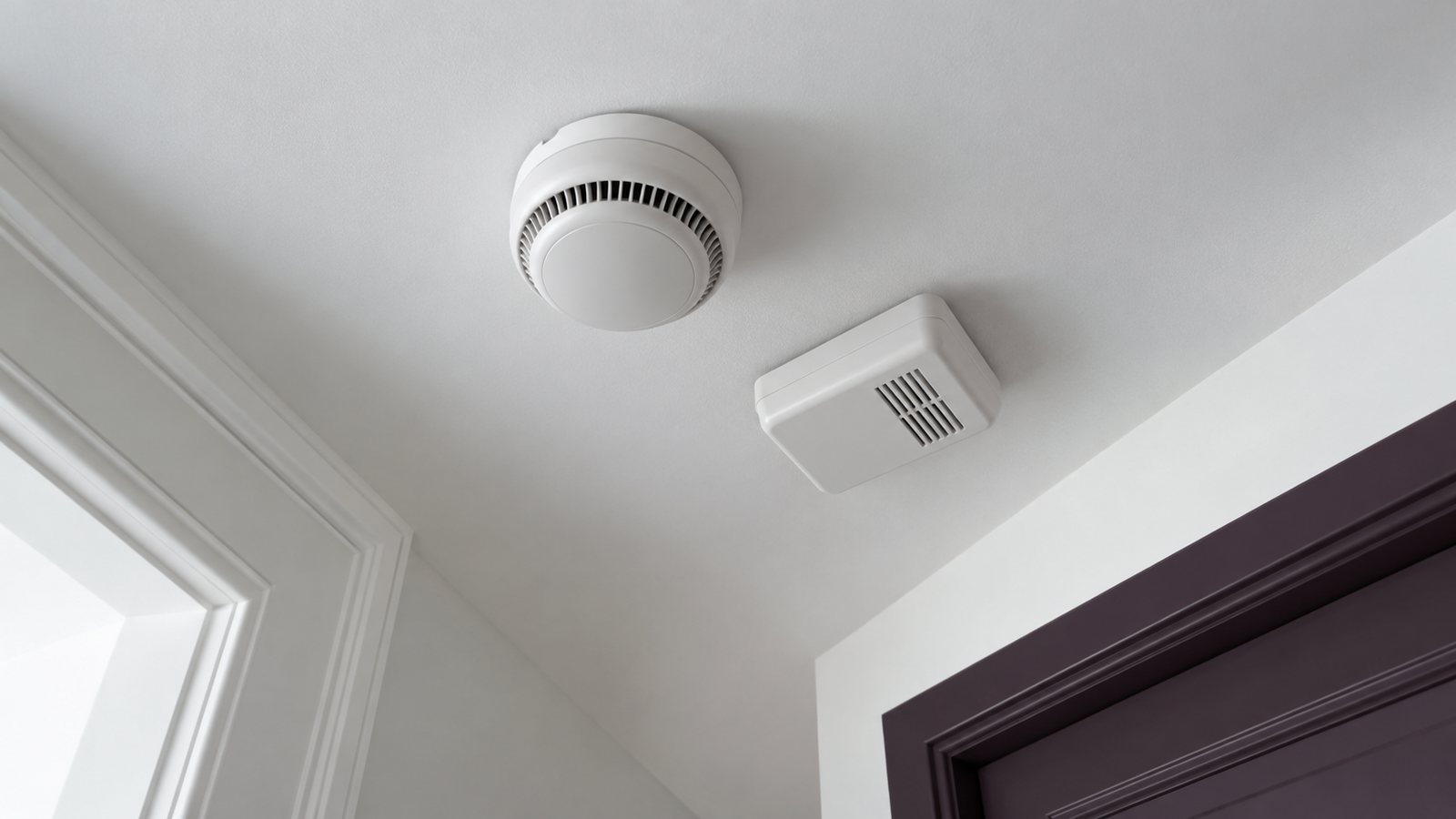
How do you check smoke and carbon monoxide alarms before buying?
To check smoke and carbon monoxide alarms before buying, make a room-by-room list of the devices you can see, ask for their models and installation dates, and review the seller's disclosures and any smoke-alarm compliance statement. With permission, ask for a demonstration using the manufacturer's test instructions. Compare the locations and types with current safety guidance, then ask the local building or fire authority about the requirements for this property. Put any needed installation, replacement or documentation in the written transaction plan before your deadlines. A visible alarm or a single beep does not settle every question.
I am Kate Fomina, a real estate broker at Crypton Realty in Alameda. I help Bay Area buyers turn a property observation into a clear request for the right professional. This guide is not a fire-safety inspection or a code determination. The image above is a fictional AI-generated image, not a real home or proof that the pictured placement complies with any rule.
Why look at alarms as their own property check?
Smoke alarms warn of fire. Carbon monoxide, or CO, alarms warn of a different hazard from a gas you cannot see or smell. A combined unit may cover both functions, while a device that looks similar from across a room may cover only one. Start by identifying the actual devices instead of calling every round ceiling unit a smoke alarm. A thermostat, security sensor or sprinkler head is not a substitute.
The Consumer Product Safety Commission's alarm guidance recommends smoke alarms on every level, outside sleeping areas and inside each bedroom. It recommends CO alarms on each level and outside sleeping areas. These are national safety recommendations, not a property-specific certificate of California or local code compliance. Layout, construction history, local rules and the device instructions can affect the installation question. Ask the responsible local authority rather than using a general website as the final answer for an address.
The Bay Area buying guide places safety and condition checks inside the broader disclosure and inspection review. Keep alarms on a separate line of your notes so they do not vanish inside a general statement that the home has "safety devices."
What can you record during a showing without disturbing the devices?
On a permitted tour, note the floor, room or hallway where each device appears. Record whether the label or seller's documentation identifies it as smoke, CO or a combination alarm. Photograph an accessible faceplate only with permission. Look for a missing unit, a covered device, an empty mounting plate or a device that appears disconnected. Write what you observed. Do not label it defective from a glance.
Do not climb a ladder, remove a cover, unplug a unit or press a test button without the seller's permission. Some alarms are part of an interconnected or monitored system. A test may sound other devices or notify a service provider. Ask the seller or authorized professional how testing should be done for that system. If an alarm is actively sounding outside a planned test, treat it as a real warning and follow emergency instructions. Do not continue a tour as though it were a routine chirp.
Your second-showing checklist can hold this simple location inventory. It should not turn a buyer into an installer. The purpose is to ask a better question while the property is available for review.
How do you distinguish the alarm types and check age?
Ask the seller for the manufacturer and model for each device, a photo of an accessible label, and any manual or installation record they have. The label and manual can tell you which hazard a unit is designed to warn about, what power or backup it uses, how it should be tested and when the manufacturer calls for replacement. A newer-looking cover does not prove a recent installation. A battery change does not reset a unit's service life.
The commission's smoke and CO alarm advice says to test alarms monthly, replace batteries at least yearly unless the unit has a sealed long-life battery, and follow the manufacturer's replacement instructions. Use the actual product instructions for this home's devices. If the model cannot be identified or the date is unreadable, record that gap and ask an appropriate professional what to replace. Do not infer a safe remaining life from appearance.
Ask whether the devices are stand-alone, interconnected or part of a monitored system. A unit attached to a ceiling does not tell you which other alarms it connects to or whether a subscription is needed. Those questions matter at possession, when the seller's account and access may end.
What does a test demonstration tell you?
With permission, ask the seller or a qualified professional to show the test procedure in the manufacturer's instructions. Record the date, which device was tested and what happened. If the device is interconnected, ask whether the expected linked alarms sounded. If it is monitored, ask the owner to coordinate with the service provider so the test is handled properly. Do not run an improvised smoke or gas test.
A test-button response is useful evidence about that procedure at that moment. It is not proof of correct location, current code compliance, a healthy sensor under every condition or enough devices for the property's layout. A failed or inconclusive test deserves prompt attention from the seller and a qualified alarm or electrical professional. A successful demonstration still leaves model, age, placement and handoff questions to answer.
Keep the test record with your other inspection notes. California's Department of Real Estate buyer guide urges buyers to use professional inspections and review the seller's disclosures before the contract decisions. A general home inspection may note alarms, but ask the inspector what the scope includes. If you need an installation or system assessment beyond that scope, arrange the right specialist within the agreement's time limits.
Which California disclosure or compliance document should you read?
Ask your agent which smoke-alarm statement applies to the property and transaction. California's current real estate law excerpts include the rule that a seller of a covered single-family dwelling must deliver a written statement of compliance with the state's smoke-alarm provision. The DRE's disclosure guide also notes that local rules can be more demanding and directs readers to local building or public safety departments. Do not apply the single-family statement automatically to every condominium, multi-unit building or exempt transfer. Have your agent or California counsel identify the document and rule for this sale.
Read the seller's Transfer Disclosure Statement and other property records for any known alarm issue. A disclosure statement is the seller's account of known facts. It does not replace your inspection, show an alarm or tell you that a device remains within its service life. If the seller identifies a missing device or a planned replacement, ask for a written description and the timing.
For a condominium, distinguish alarms within the unit from a building fire system or common-area equipment. Ask the association or building manager who maintains each part and what records are available. Do not assume an association's equipment covers a missing unit device, or that the unit owner can modify the building's system without approval.
Who decides the location and any replacement work?
Use the national guidance as a question list, not a do-it-yourself code ruling. Give the property's address and layout to the local building or fire authority when you need a requirement interpreted. Ask whether recent permitted work or the home's configuration changes what must be present at the transfer. If a replacement or wiring change is needed, ask a qualified professional to select and install the proper devices under the applicable instructions and rules.
Power source matters. Some devices use replaceable batteries, some use sealed batteries, and others are connected to household wiring or a larger system. Do not disconnect or substitute one type because it looks easier. A professional can check compatibility with an existing interconnected system and explain what work is required. Your real estate agent can coordinate access and written terms, but should not certify an electrical or alarm installation.
The Alameda County buying page helps you keep this question in the larger local search. The actual authority for device placement remains the property's jurisdiction, not a county label on a blog article.
How do you check for a product recall or missing instructions?
Once you have the model and manufacturing information, compare them with the commission's official recall search. Read the exact model and date range in any notice. A brand match alone is not a recall match, and a search with incomplete label information cannot clear a device. Ask the manufacturer about a hard-to-read label or missing manual. Follow the remedy in an applicable official notice rather than improvising a fix.
For alarms, a current warning deserves especially prompt attention because these devices serve a safety function. If the home has an attached garage, the published garage checklist covers related access and equipment questions. If the seller says a replacement was completed, request the replacement model or receipt and verify the new device, rather than assuming an old recall was resolved.
A missing manual is often recoverable from the manufacturer using the exact model. If you cannot identify the model or locate trustworthy instructions, add that to the replacement discussion. An online listing photo does not show enough detail to settle it.
What belongs in a useful buyer alarm checklist?
Keep the review short enough that you can use it before a contract deadline:
- Location: Record each visible device by floor and room or hallway.
- Type: Ask for the model to distinguish smoke, CO and combination alarms.
- Age: Check the available manufacture or installation record and the maker's replacement guidance.
- Testing: Ask for an authorized demonstration and note which devices responded.
- System: Identify any interconnected, monitored or association-controlled equipment.
- Rule: Ask the local authority or qualified professional about address-specific placement and installation questions.
- Handoff: Put any replacement, documentation or account transfer in the signed agreement.
A blank box is not a failure. It tells you which question remains open. A checked box is not a certificate that the whole system is compliant. The point is to make the seller, inspector, local authority and transaction professionals answer the parts they actually know.
Which common mistakes should you avoid?
Calling every ceiling device a smoke alarm. Identify the model and purpose. Similar covers can hide different functions.
Using one test beep as a safety certificate. Testing is one part of the review. Location, age, instructions and the broader system still matter.
Assuming the seller's written statement replaces a buyer review. Read it carefully and ask about any visible gap or conflicting record before the decision deadline.
Guessing local code from a national diagram. The commission gives useful national guidance. The relevant local authority interprets requirements for this address.
Leaving a monitored account vague. Put the equipment, access and any account handoff in writing. A wall-mounted unit does not guarantee that a service account transfers to the buyer.
Waiting until the final walk-through to raise a known issue. Ask early enough for professional access and a written response. The final walk-through is a condition check, not a substitute for an inspection window.
Can a home be sold if an alarm is missing?
The answer depends on the property's type, the applicable state and local requirements, and the contract. Do not assume that a missing device automatically cancels a sale or that a buyer can ignore it. Ask your agent to identify the required statements and deadlines, ask the local authority about the installation rule, and put any agreed correction in writing. If an alarm is actively warning, treat that as a safety issue now, not a closing checklist item.
Should you test an alarm yourself during a tour?
Ask first. The seller or authorized professional can explain how that system is tested, and an inspector can tell you what testing is within the inspection scope. Do not climb, remove a cover, disconnect wiring or trigger a monitored system during a showing. Record the requested test and follow up before your contract deadline if permission or access is not available.
What if the alarm is present but its model or age is unknown?
Photograph an accessible label with permission or ask the seller for a clear photo and records. Check the manufacturer instructions and official recall search once you have the model. If the information remains unavailable, ask a qualified professional whether replacement is the sensible way to close the gap. Do not claim that appearance or a fresh battery proves remaining service life.
What should you decide before removing a contingency?
Decide whether you have enough information about the devices, testing, applicable requirements and any agreed work. If a professional or local authority still needs to answer a material question, discuss that timing with your agent before acting on the contract. I can help organize the requests and keep the written decision clear. Contact Kate Fomina about a Bay Area home you are considering, and use the buying process to see where disclosure and inspection review fits.