2026-11-28 · 9 min read · Bay Area
How Do You Check Interior Stairs and Railings Before Buying a Bay Area Home?
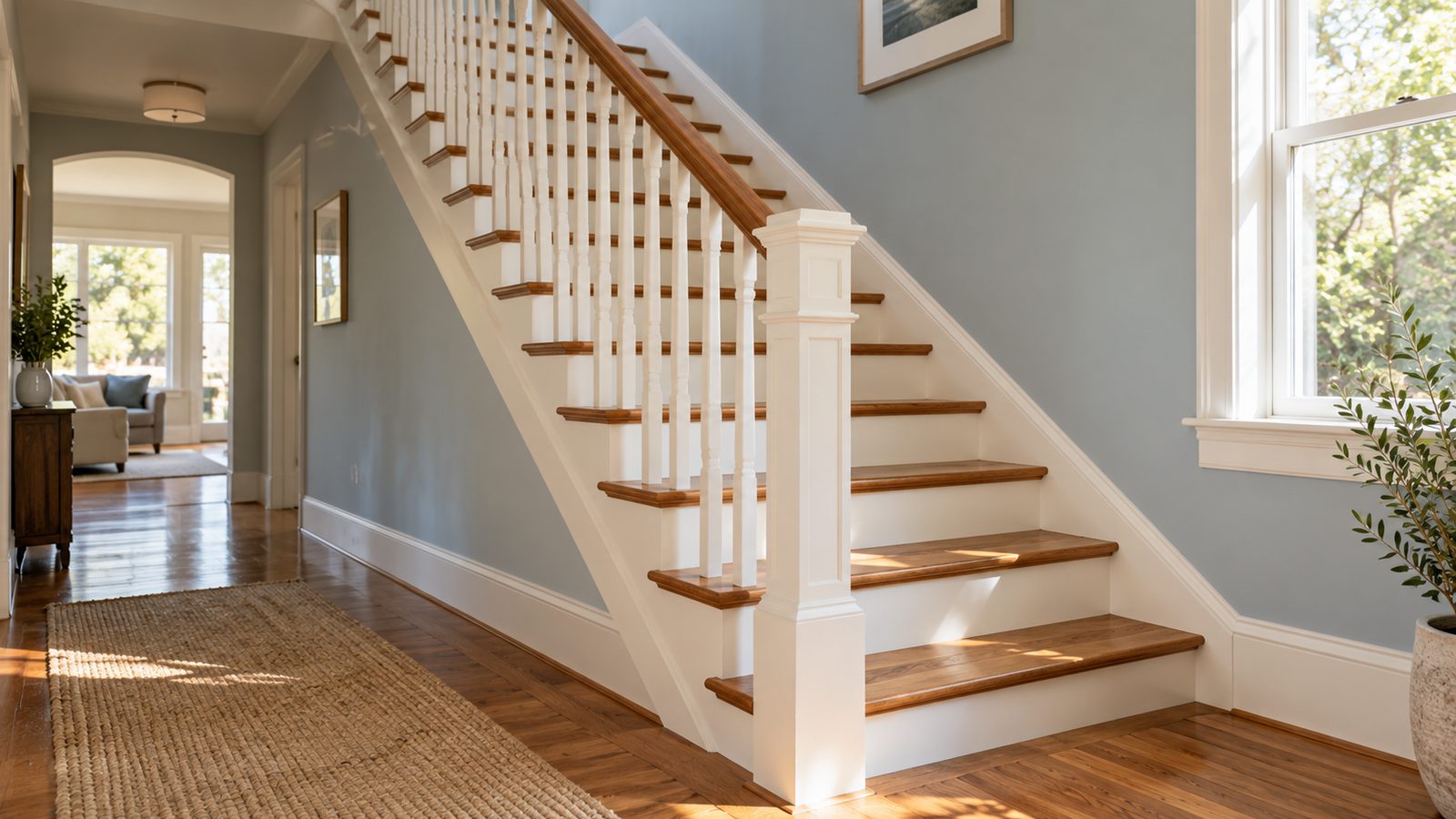
How do you check interior stairs and railings before buying?
To check interior stairs and railings before buying, walk every stair run with permission, note what you can see and feel, read the inspection report and seller disclosures, and ask a qualified inspector about anything loose, uneven or altered. Ask the local building department about address-specific permit history if the stairs were changed. Put any request for further access or repair into the written buying conversation before your contract deadlines. A staircase that looks freshly painted is not proof of its condition.
I am Kate Fomina, a real estate broker at Crypton Realty in Alameda. I help Bay Area buyers organize property questions and get the right professional involved. This article is not a structural inspection, a code finding or legal advice. The image above is a fictional AI-generated scene, not a real property or evidence that its stairs meet any standard.
A staircase is easy to overlook on a tour. You use it to reach the next room, and your attention goes to the kitchen or view. Slow down here. The useful question is not whether the stairs look attractive. It is whether you know what was inspected, what was not accessible, and what remains for you to decide before you accept the property's condition.
What should you notice while walking the stairs?
Start at the lower landing and look at the full path. Is the route clear? Is there enough light to see each step and the change in direction? Do rugs, cords or furniture sit where someone would step? Look at the tread surfaces for loose carpet edges, worn finish, raised trim or visible gaps. If a step shifts, creaks in a new way or feels different from the next one, write down the exact location. Do not try to diagnose the framing from the sound alone.
Look at the handrail as a separate item. Notice whether it continues along the run, whether its visible brackets or posts appear secure, and whether a change in direction leaves a place where support is missing. At an open edge or landing, look at the guard that blocks the drop. A handrail is what a person grips while using stairs. A guard is the barrier at an open side. They may be part of one assembly, but they answer different questions. Ask the inspector to identify each in the report rather than using the single word railing.
The Consumer Product Safety Commission's stair-safety guidance recommends handrails, good lighting and steps free of clutter. That is national safety guidance. It does not certify a particular home or decide what its local building code requires. A buyer's walk-through is an observation, not a test of a rail's load capacity. Do not lean hard on a questionable rail to find out whether it will hold.
Which parts need a closer inspection?
Ask the general home inspector to describe the stairs they could reach and the limits of their inspection. Did stored belongings block a run, landing or the space beneath it? Was a carpet runner fixed in place? Did the inspector operate the stair lighting? Was there an open edge that could not be viewed from a safe position? An inspection report that says a staircase was present is different from a report that describes its condition.
Pay particular attention to transitions. A landing connects one run to another. The top and bottom steps connect the stair to a floor that may have a different finish or height. A newly laid floor can change that transition. Ask whether the inspector saw an uneven step, loose nosing, damaged tread, movement at the landing, or a gap at a rail connection. Nosing is the front edge of a step. These are observations worth locating precisely, not conclusions that the entire staircase must be rebuilt.
If the report calls for an evaluation by a contractor, engineer or another specialist, ask what question that person needs to answer and what access they need. A contractor can discuss repair scope. An engineer may be needed for a suspected structural issue. The local building department determines permit records and code questions. Your real estate agent can coordinate access and contract communication, but cannot certify the stair assembly. California's Department of Real Estate buyer guidance encourages buyers to inspect the property and seek qualified advice about structural matters.
How do you review disclosures and renovation records?
Read the seller's disclosures for past repairs, known damage, modifications and any explanation of work on the stairs or nearby floor. Compare that account with the inspector's observations. A disclosure is one source of information, not a substitute for your own inspection. The disclosure package guide explains how to turn a broad document set into questions that can be answered before a deadline.
Ask for whatever records the seller actually has, such as invoices, plans, permits, final approvals or a warranty for recent work. A contractor invoice can identify who did the work and what was billed. It does not by itself show that a permit was required, issued or signed off. A permit record may name a project without explaining the condition you see today. If no record exists, say that plainly in your decision notes. Do not fill the gap with an assumption that an older staircase was either approved or unapproved.
Building requirements can vary by jurisdiction, the kind of work and when it was done. Ask the building department serving the property's address whether the work you are considering required a permit and how to search the record. If the issue affects a buying decision, get a qualified professional's written opinion instead of applying a generic online dimension chart to this home.
What if the stairs were changed or finished recently?
Fresh flooring, paint or a new rail can be a normal update. It can also conceal details you cannot see on a tour. Ask what changed. Was a carpet runner removed? Was hardwood added over an older tread? Was a landing rebuilt, a wall removed, or a rail replaced? The answer can guide the right inspection request. It does not turn an attractive finish into proof of sound construction.
Compare the seller's description with the visible finish and the documents. If a permit is mentioned, ask for the permit number and final status. If a contractor is named, you can verify the license through the California Contractors State License Board's consumer guidance. License status helps identify the business. It is not an inspection of the completed stair. Ask the inspector what remains visible and what the finish prevents them from evaluating.
Keep the stair question separate from the rest of the flooring review. The flooring checklist covers surface condition across rooms. Stairs add changes in level, hand support, landing connections and open edges. If the stair was remodeled as part of a larger project, review the permit history for that project as a whole. Do not assume a photo in a listing establishes when the work happened or whether it was finished.
How should you decide what to ask for before a deadline?
First, separate observations from unresolved questions. A visible scuff is not the same as a tread that moves. A loose rail connection is not the same as uncertainty about a permit. Put each item on its own line, with a photo or report page if you have one. Then ask the relevant professional for the narrowest useful answer: condition, scope of repair, permit status, or the need for a deeper evaluation.
Second, check your contract dates. Access for a specialist, review of a written opinion and any request to the seller take time. The buyer process explains where property investigation fits in Kate's broader method. Your signed agreement controls the actual rights, dates and procedure in your transaction. California DRE's first-time buyer guide discusses inspection contingencies, but it does not replace your specific contract. Ask your broker or attorney if the wording or deadline is unclear.
Third, decide what information would change your decision. You may want more inspection access, a contractor's written scope, records from the local department, a negotiated repair, a credit or no further action. Those are possible conversations, not promised remedies. A seller is not automatically required to make your preferred repair, and an estimate is not a guarantee of the final cost. Ask who would perform any work, what documents would be delivered and how completion would be checked. Keep the agreement in writing.
What should your stair review checklist include?
Use this checklist to make a specific request. It does not replace a home inspection or a local code review.
- Access: Which stair runs and landings could the inspector reach? Save the report pages and any stated access limits.
- Condition: Where did a tread, landing, handrail or guard appear loose or damaged? Record the location and photo, then ask for a qualified follow-up opinion.
- Lighting: Can you see each step under normal lighting? Ask to see the installed lights operated and compare that with the inspector's observation.
- Past work: Was any stair or rail work done recently? Ask for available invoices, plans, a permit number and final status.
- Decision: What remains unknown before you decide? Write down who can answer each question and the relevant contract date.
Bring this list to a second showing if the seller grants access. Do not move stored items, remove a runner, open a wall or test a suspect rail without permission and the appropriate professional. An inspector may need a separate visit when the original inspection could not reach the area. If the property is a condominium, ask which stair runs are within the unit and which are common areas before deciding whom to contact about a repair.
Which stair-review mistakes can change your decision?
One mistake is treating appearance as evidence. Paint can make a rail look uniform even when the connection under it was not examined. Another is treating a general inspection as a code certificate. Inspectors report observable conditions within their scope. The authority having jurisdiction answers local permit and code questions. Ask for the report's limitations before you rely on a short summary.
A third mistake is asking for a vague repair. “Fix stairs” leaves open which run, which defect, who will perform the work and how you will know it is complete. A written request should identify the location and the professional finding it addresses. Keep a copy of the report page and any response. A fourth mistake is waiting until after you remove an investigation contingency to ask for the specialist visit. Your agreement controls timing, and a missed date can narrow your options.
There is also a safety mistake: testing a loose rail yourself. You cannot learn its capacity by putting your weight on it during a showing, and you may make the condition worse. Mark the location, tell the inspector, and let the appropriate professional evaluate it. Plain and careful wins here.
Do all older staircases have to match the current code?
No single answer fits every older staircase. The applicable rules can depend on the home's jurisdiction, the type and date of work, any permit, and whether a later alteration triggered review. A buyer should not label an older stair legal or illegal from a photograph. Ask the local building department about the address and the specific work. Have a qualified professional assess current condition even if the department finds a historical permit.
A permit record answers a different question from a condition inspection. A permit may tell you about an approved scope at a point in time. It does not prove that no later damage occurred. An inspector's observation can identify a present concern, but it does not rewrite a local permit record. You need both kinds of information when both matter to your decision.
Can a home inspector tell you whether a railing is safe?
A home inspector can report visible conditions, note movement within the inspection's scope and recommend further evaluation. Ask the inspector exactly what was checked and what could not be checked. Do not turn “not noted” into “fully checked.” If a railing, landing or tread raises a structural question, use the inspector's recommendation to find a qualified specialist.
The useful result is a specific description: the location, the observed condition, the access limits and the recommended next step. That gives you and the seller something concrete to discuss. It also keeps a cosmetic observation from being confused with a structural conclusion.
What if the seller offers to repair the stairs before closing?
Ask for the proposed scope, the person who will do the work, any needed permit and how completion will be documented. Decide with your broker whether a reinspection is needed before you accept the work. A receipt alone tells you that someone billed for work. It does not tell you whether the specific condition in your report was resolved.
If the parties agree on a repair or credit, put the terms in the signed transaction documents. Do not assume a verbal promise changes your contract. If the work cannot be completed before closing, ask your broker or attorney what a written plan would need to address. Your options depend on the agreement and the facts, not on a general rule from an article.
What is the next step for a Bay Area buyer?
Read the stair notes in the inspection report, walk the route with permission and write down the exact open questions. Then choose the professional who can answer each one. You do not need a dramatic conclusion from a worn tread or a new coat of paint. You need enough verified information to decide what to accept and what to ask for before your contract date.
If you are buying in Alameda County, the Alameda County buying guide connects property review to the local buying route. The Bay Area buyer guide covers the broader buying process. If you want help organizing the questions for a specific home, contact Kate Fomina. Bring the report and your contract dates so the discussion starts with facts.