2026-10-20 · 8 min read · Bay Area
What Should Buyers Check About a Sewer Lateral?
What should a buyer check about a sewer lateral?
Ask where the private sewer lateral runs, who is responsible for it, and whether the seller has a recent inspection, repair record, or compliance certificate. Arrange a qualified sewer-line inspection when the available records do not answer the condition question. Then check the exact property address with the responsible city, sanitary district, or utility for any transfer requirement. Review the finding and possible cost before the applicable contract deadline.
I am Kate Fomina, a broker at Crypton Realty in Alameda. I help buyers organize the questions, records, and timing. A licensed plumber or other qualified specialist must evaluate the pipe. The local authority decides its rules, and an attorney can explain a contract obligation.
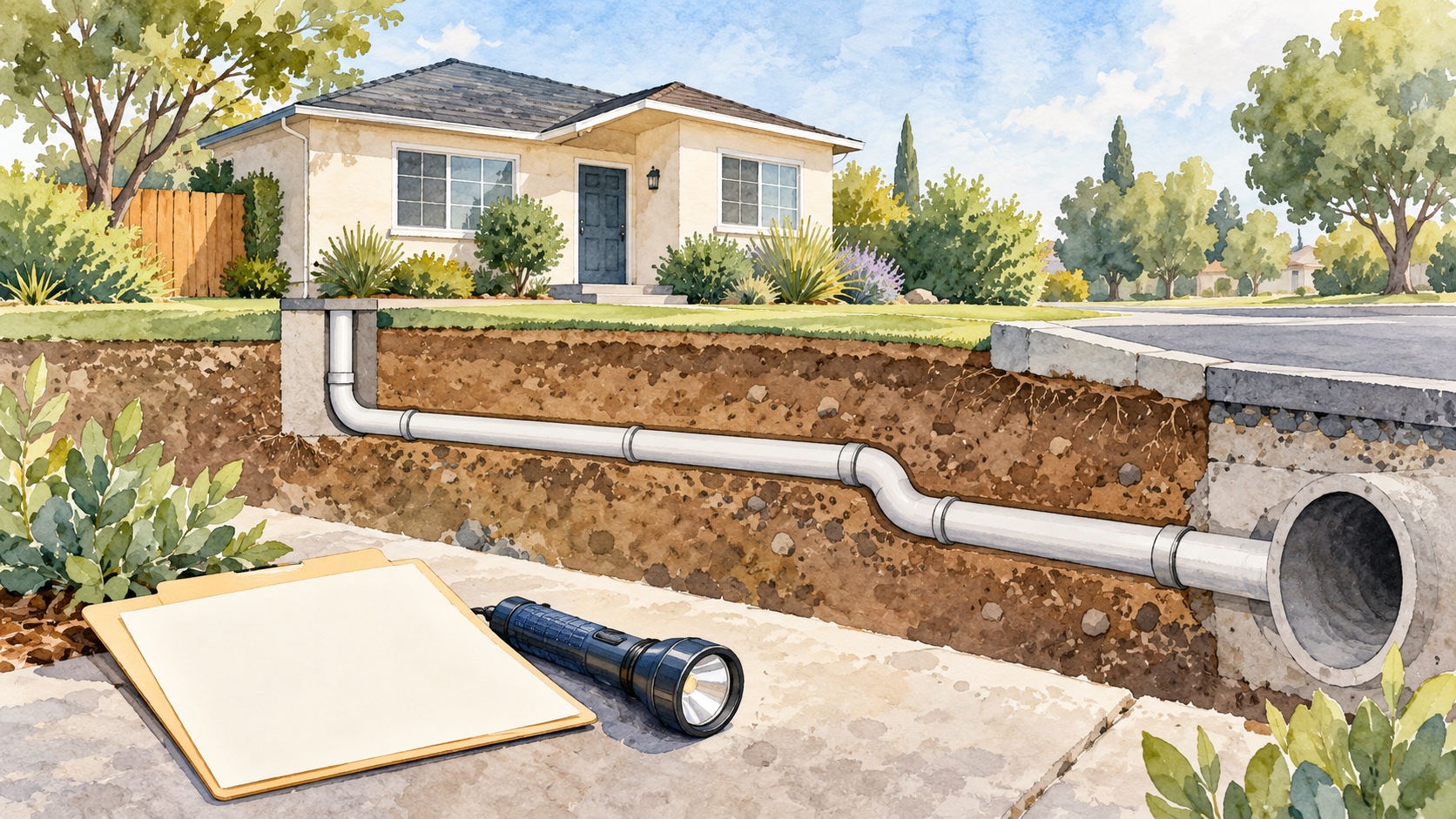
The image above is a fictional illustration. It is not a real property, utility plan, inspection, condition report, or compliance finding.
What is the private sewer lateral?
It is the pipe connecting a building's wastewater plumbing to a public sewer system. Its route, construction, ownership boundary, and maintenance responsibility vary. A drawing can help you ask questions, but it is not proof of the actual pipe location. The seller may have a repair invoice, prior video, or utility record. Request the original document and its date rather than relying on a summary.
A standard home inspection may not include a camera review of the buried line. The National Association of Realtors consumer guide to home inspections explains that inspection scope varies and buyers may seek specialized inspections. The California Department of Real Estate buyer guide encourages professional evaluation of plumbing and other systems.
My Bay Area buying guide places a specialized inspection beside the other property investigations a buyer may need.
Which records are worth requesting?
Ask for prior sewer-scope videos and written reports, cleaning or root-removal invoices, repair permits, contractor descriptions, warranty terms, and any certificate issued by a local sewer program. Read the date and address on each document. An older video may describe the line at the time of that recording, not its condition today. A cleaning invoice shows work was performed, but it is not a full condition opinion.
Ask the seller in writing about known backups, recurring slow drains, prior leaks, and work performed. Keep the seller's response with the disclosures. Do not infer that an empty file means the line is sound. If a record mentions a repair, ask which section was repaired and whether the rest of the lateral was evaluated.
My disclosure-package guide explains why specific written questions and documents are more useful than a broad verbal assurance.
How does a buyer arrange a sewer-scope inspection?
Ask a qualified contractor what line will be viewed, where the camera will enter, whether access is available, whether the public connection can be reached, and what the written deliverable includes. Confirm the scope and fee before scheduling. An inaccessible cleanout or obstruction can limit the review. Ask the inspector to say clearly where the camera stopped and why.
Request the video, a written description tied to locations in the line, and a distinction between an observed condition and a suspected cause. Ask what further work would be needed to determine repair options. The contractor should explain whether a proposal is for cleaning, a localized repair, or replacement and what uncertainty remains. A second qualified opinion can help when the proposed work is substantial or the first report is unclear.
Coordinate entry through the agents and the signed agreement. The buyer should not authorize excavation or other invasive work without the property owner's written permission and appropriate professional guidance.
What does a camera video tell you, and what does it leave open?
A camera can show visible interior conditions along the portion it reaches. It may identify a blockage, offset, intrusion, or other feature for the inspector to evaluate. It does not automatically establish the pipe's precise legal location, ownership, outside condition, future life, or cost to repair. Ask the contractor to explain the limits in plain language.
Keep the full video, not only a still frame. A single image may omit distance and context. Ask whether the report distinguishes observed facts from recommendations, and whether any section could not be viewed. If the inspector recommends further testing or excavation, ask what question that work would answer.
The NAR questions for home inspectors offer a useful general pattern: ask what the inspection covers and what falls outside it. Apply that same discipline to a sewer specialist.
How can local transfer rules affect the timeline?
Some Bay Area jurisdictions have private sewer lateral programs tied to a property transfer, while others have different triggers or procedures. The California Association of Realtors transaction guide lists sewer lateral requirements among the local point-of-sale rules to check when applicable. It does not establish a rule for every address.
Ask the responsible local sewer agency directly whether the property is within its program, what documents it accepts, when testing is needed, and who must obtain a certificate. Get the answer for the specific address and current transaction. An old certificate, neighboring property's rule, or city name alone may not settle the question. Ask escrow and the agents how any required document fits the agreed closing schedule.
My Alameda County buying page covers the broader decision path. The county page is not a substitute for an address-specific utility answer.
Who pays if the line needs work?
The report identifies a question, not an automatic allocation of cost. The signed agreement, local requirements, contractor scope, and the parties' written negotiation determine the path. Ask for a written estimate that states what is included, what is excluded, who obtains permits, how the site will be restored, and what could change the price. A lender or insurer may have separate requirements.
If the seller offers to complete work, define the work and completion evidence in writing with professional advice. If a credit is proposed, ask the lender whether it is permitted under the loan and whether it would leave the buyer with enough time and access to complete the work. My contingency guide explains how buyers can organize a repair question without treating a quote as a guaranteed final bill.
When should the buyer decide?
Put inspection access, report delivery, local agency response, contractor estimates, and contingency dates on one calendar. If the report arrives late, ask your agent and attorney what the written agreement allows. Do not remove a contingency based on an expected certificate or an oral promise that repairs will be simple.
Compare the documented condition with your repair budget and the rest of the property investigation. A sewer issue can be one of several decisions. My second-showing checklist
Write down what is known, what remains unverified, who owns the next answer, and the deadline. That is a more useful decision record than a single label such as pass or fail.
Can a seller's recent certificate replace an inspection?
A certificate may establish compliance with the issuing program's stated test as of its issue date. It does not answer every question about present pipe condition, route, or a buyer's future maintenance responsibility. Read the certificate's scope and expiration, confirm its status with the issuing agency, and ask a qualified inspector whether additional review is useful for your purpose.
For a shared line or condominium, request the governing documents and ask who maintains which segment. The answer may differ from what a single-family buyer expects. My disclosure-package guide
What should you do next?
Request the seller's lateral records, identify the responsible local authority, schedule a qualified scope review when needed, and collect the complete written findings. Bring any proposed work, certificate requirement, and deadline into one discussion with your agent and the appropriate specialists. Do not assume another property's rule or a past cleaning proves this line is ready.
If you are weighing a Bay Area home and want help organizing the transaction questions, contact me. This is general real estate information, not plumbing, engineering, legal, lending, insurance, or financial advice. The qualified professional and responsible agency determine the technical and local requirements.