2026-11-16 · 9 min read · San Jose
Buying Near the San Jose Rail Extension: What Should You Check?
What should you check before buying near the San Jose rail extension?
Before buying near the San Jose rail extension, separate current construction from future train service. Read the work notice for the block, test the routes you can use today, and check whether project records raise a question about the specific property. A future station on a map does not establish today's commute or the rights attached to a home. Start with VTA's Phase II project overview, then narrow the search to the address.
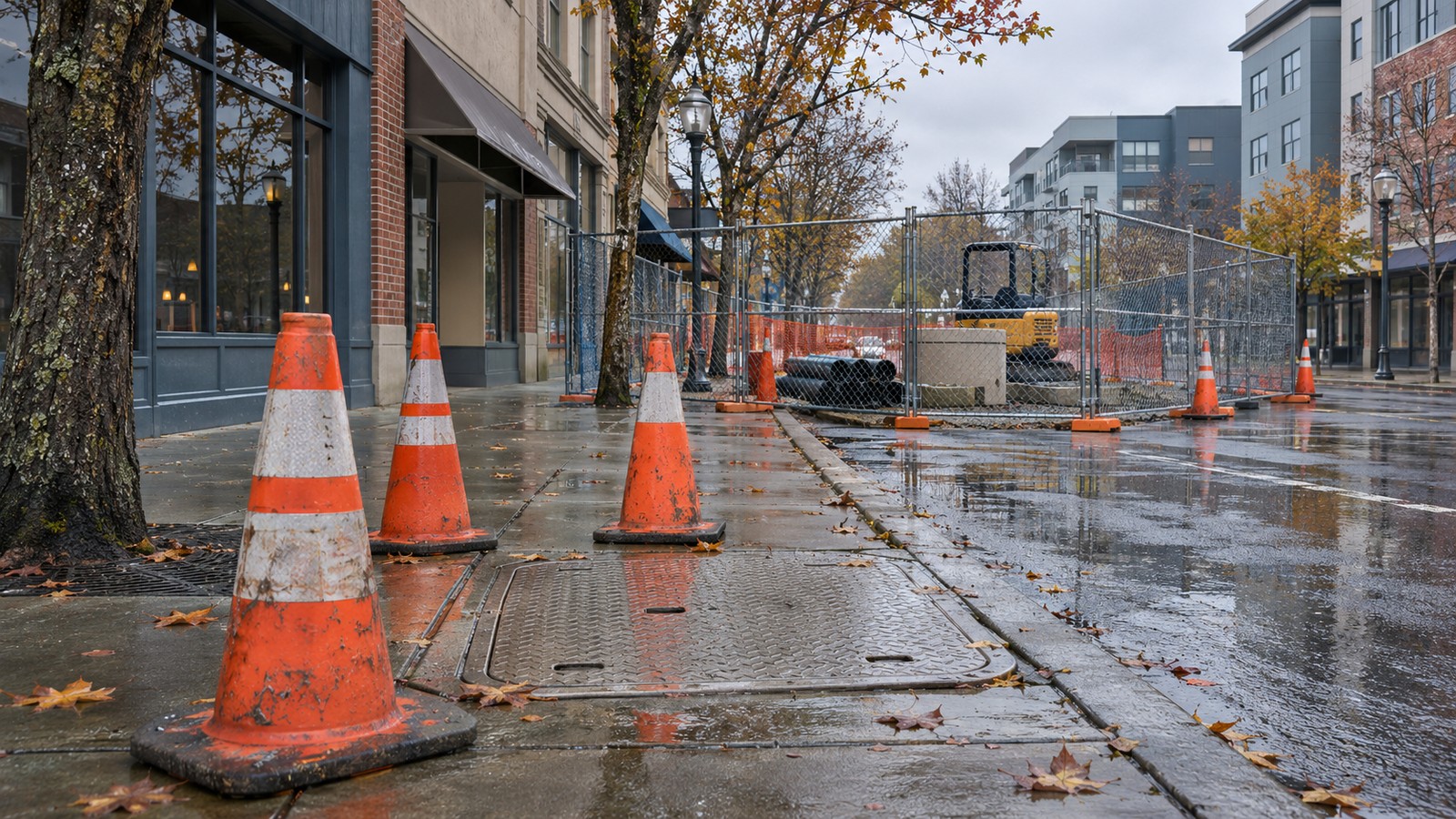
The image above is a fictional AI-generated editorial scene. It is not a photograph of San Jose, a real property, or a rail construction site.
Kate Fomina is a real estate broker in Alameda, California, serving buyers and sellers across the Bay Area through Crypton Realty. For a San Jose home decision, the useful question is what can be checked before you commit. A regional project announcement gives context. The home still needs its own review.
What does the November construction notice say about downtown and Diridon?
VTA's November 2026 construction update describes ongoing fiber transfers around the future Downtown San Jose station area. For that activity, the notice anticipates no significant vehicle or pedestrian traffic impacts. The same notice describes a different operation near Diridon: conduit work on Santa Clara Street and Barack Obama Boulevard scheduled for November 11-18, with westbound lane closures on Santa Clara Street and a partial sidewalk closure on Barack Obama Boulevard.
The notice expects follow-up restoration and paving to finish by November 20. Those are the notice's planned dates, not confirmation that a particular block is clear today. Check for a replacement notice before a showing or an offer. Do not carry these dates into a later month as though the work is still active.
This distinction is useful when comparing addresses. A notice about a small downtown utility crew does not describe every nearby work zone. Ask which operation is relevant to the route from the home.
Which future station are you looking at on the map?
Downtown San Jose and Diridon are separate proposed stations planned for Bay Area Rapid Transit. VTA's Downtown San Jose station page describes a future station along Santa Clara Street near Market and First Streets. Its planned Diridon station page places that future station south of Santa Clara Street between Montgomery and Cahill Streets. The drawings are conceptual and subject to change.
Put the home and the relevant planned entrance on the same map. Then ask a separate question: where can you board the service you need now? An existing station complex and a future rail entrance are different things. Do not turn the word Diridon in a listing into a claim that you can already board a Bay Area Rapid Transit train there.
The Santa Clara County buying guide covers the broader home search. For this comparison, keep the address and the route visible together.
How can you test access without guessing about the finished project?
Start at the front door of the home, not at the center of a neighborhood map. Try the route you would use to reach a current stop, a workplace or another regular destination. Check crossings and the approach to the actual entrance. If access depends on a particular walking route, review that route rather than assuming the shortest line on the map is usable.
Use the date of your visit. A temporary work area may change how you enter a garage or reach a corner. That observation can help frame a question, but it cannot establish how long the arrangement will remain. Look for the matching notice on the project's construction page or ask the project team about the specific block.
Write down what matters to you before touring. That might be a usable garage approach or a transit connection at the hours you travel. Keep those needs in the property review stage of the buying process. A future improvement should not erase a present problem you cannot accommodate.
Can you rely on a future rail opening when choosing a home?
Use future service as a separate consideration, not a substitute for a workable plan now. VTA's construction overview separates early work, major construction and the later steps needed for passenger service. Utility relocation or a station drawing is not an announcement that trains have begun operating.
Ask whether the home still works for you if the future connection takes longer than expected. Check the current route and your own travel needs. If your decision only works with an assumed opening date, identify that dependency before signing an offer. You do not have to predict the whole project's schedule to decide whether your present plan is workable.
This article does not forecast a service opening or a travel time. Check a current agency announcement for those questions, and distinguish a target from an operating timetable. A past presentation should not quietly become a promise in a home listing.
Could a tunnel easement affect the property you are considering?
VTA's tunnel alignment and easement guidance says parts of the planned tunnel require rights beneath private property. An easement gives defined rights to use land for a stated purpose. The agency explains that tunnel easements can place requirements on future underground work. That does not establish an easement on every home near the route.
If this question matters to your offer, ask for the actual property records and any correspondence from the project team. Have title and a California real estate attorney address the documents for that parcel. Do not infer a restriction from proximity alone, and do not assume an absence of visible construction settles the title question. The lot-line and easement guide covers the broader document review.
Which records should you ask about before a contract deadline?
Keep a short record of what each document answers. A title document concerns interests affecting the land. An agency notice describes a project activity or request. A listing description summarizes the home for sale. Those documents serve different purposes, so do not use one as a substitute for the other. California DRE's reference chapter on title to real property explains the title concepts behind that distinction.
Ask the seller whether there are project letters, access requests or agreements relevant to the home. Give any records you receive to the appropriate reviewer. If an issue is unresolved, write down who is answering it and what written response is still needed. Your contract deadline may arrive before an agency replies, so discuss the timing with your agent rather than treating silence as an answer.
You are building a set of questions, not making a legal conclusion from an online map. If development plans or underground work are central to your decision, obtain property-specific advice before relying on them.
What does VTA's building monitoring information mean for a buyer?
The VTA building monitoring description discusses documenting existing conditions and monitoring selected properties near construction. It includes pre-construction surveys and later comparison of conditions. That description is not a finding that the home you are considering has damage or needs monitoring.
If the seller has a survey report or monitoring correspondence, ask to see it. A qualified inspector or engineer should address a physical condition concern. Title and counsel handle the rights in any access or easement document. Keep those questions separate instead of asking a single project map to answer both.
What can a seller say about nearby rail work?
A seller can assemble the dated records that relate to the home and keep the listing description tied to what those records support. Future rail service, existing transit access and work happening outside are separate statements. Before using a station name in marketing, confirm what is operating and what is planned. Avoid treating a conceptual entrance or an estimated schedule as a completed amenity.
Prepare the same documents a careful buyer would request. Keep agency correspondence with the property file, identify any unresolved question, and ask your broker or attorney how to address property-specific disclosure obligations. A generic article cannot determine those obligations for an unknown home.
The Santa Clara County selling guide explains the wider preparation work. Kate Fomina, broker at Crypton Realty, can help organize the real estate questions and coordinate the appropriate specialist review. The project team should confirm project details.
Should nearby rail construction change the price you offer?
A project announcement alone does not establish what a home is worth. Compare the home as it exists with relevant property evidence. Then identify whether a documented issue changes your ability to use it or creates a question that needs resolution. You may decide a current access problem does not suit your plans. That is different from asserting that every home near a construction corridor deserves the same discount.
The same caution applies to a future benefit. Do not assign a resale premium simply because a planned station appears nearby. Your likely length of ownership, the present home and the evidence available for comparable properties deserve separate attention. Keep the future possibility visible without treating it as money already earned. Neither this article nor a project rendering can establish a specific gain, loss or offer price.
What should your address checklist contain?
Use a brief checklist that another person can follow without guessing which home or notice you meant:
- Record the home address and the particular project area you are reviewing.
- Save the relevant work notice with its date, location and expected duration.
- Describe the routes and access you can use now, separately from future station plans.
- List title questions and any project correspondence received for the property.
- Assign unanswered physical, legal and project questions to the right professional.
- Record the contract deadline and what remains unresolved before that date.
Update the file when you receive a new notice or a written response. A saved answer without its source or date can be hard to interpret later. Keep the file with the rest of your home-buying review so the address-specific questions do not get lost among general project announcements.
Does the November notice mean all downtown streets are closing?
No. VTA's November notice identifies different activities in different project areas. It does not announce a blanket downtown closure. Find the street and operation relevant to your route, then check for a newer notice. Do not assume a traffic arrangement applies beyond the dates and area described.
Does a route map prove the home has a tunnel easement?
No. A route map gives project context. It does not replace a parcel review. Ask title and counsel to evaluate the records for the home and direct any project boundary question to VTA. If the answer is important to your plans, obtain it in writing rather than relying on an informal description of the neighborhood.
What is the next step for a San Jose home decision?
Choose the address and name the unresolved question. Is it today's route, a dated work notice, or a record affecting the land? Find the document that can answer it, then give it to the person qualified to review that issue. That is more useful than deciding for or against a whole city from a construction headline.
Sources were checked on November 12, 2026. Construction notices can change before a showing, an offer or publication. Recheck the dated notice before using the November traffic details. Contact Kate Fomina to organize the property review and its next steps.