2026-11-15 · 10 min read · Bay Area
What Should Buyers Check About Mature Trees Before Buying a Bay Area Home?
What should buyers check about mature trees before buying a Bay Area home?
A useful mature tree checklist before buying starts with separate questions about condition, location, ownership, past work, nearby structures, and future plans. Walk the accessible parts of the site. Record what you can see without diagnosing it. Ask for the seller's records. Then bring the right unanswered questions to an arborist, inspector, surveyor, title professional, insurer, contractor, local agency, or attorney.
A healthy-looking canopy does not settle every question. A visible root does not prove damage. One trimmed branch does not explain the history of the tree. The goal is to understand what is known, what still needs review, and whether the remaining uncertainty fits your decision before the deadline in your signed agreement.
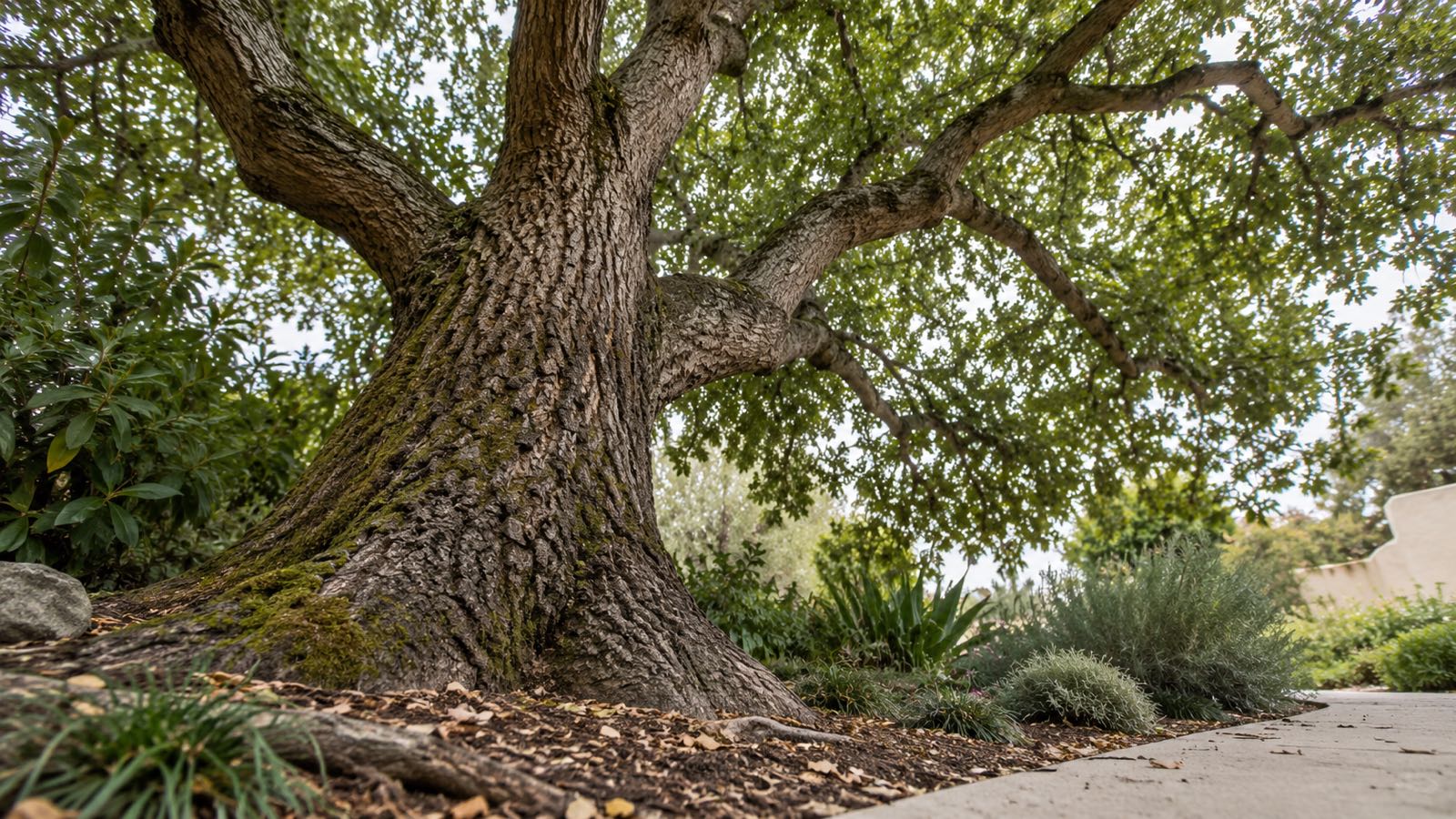
The California Department of Real Estate buyer guide tells buyers to investigate the property and use appropriate professionals when needed. At Crypton Realty, I help Bay Area buyers organize that work without turning observations into technical conclusions. The photograph above is fictional. It does not show a real property, tree inspection, defect, client, or transaction.
Start with location and responsibility before you judge condition
Begin by identifying where the trunk, visible root area, and canopy sit in relation to the parcel, street, neighboring property, shared area, and any association-maintained space. Do not assign ownership from the direction a branch grows or from which side of a fence holds the trunk. A fence is not a boundary determination, and a canopy crossing a line does not answer who may perform work.
Compare the preliminary title report, recorded map, any available boundary work, easements, and association documents. Ask a licensed surveyor if the legal location matters to your plans. Ask the title company what its records show. If rights or responsibility are disputed, a California real estate attorney should interpret the documents and facts.
The preliminary title report guide can help you separate a recorded document from a physical conclusion. This distinction matters before you budget for pruning, removal, root work, or a future project that assumes the tree is yours to change.
Which visible details should you document without diagnosing them?
Photograph the entire tree from more than one safe viewpoint. Then record the trunk base, major branch connections, visible cavities, dead-looking limbs, broken branches, fresh cuts, cables or braces, fungal growth, soil changes, and areas where the canopy touches a roof or another structure. Note whether the view is blocked. A photo can direct an arborist to the right place, but it cannot prove the cause or seriousness of a condition.
Look at the ground around the trunk. Record exposed roots, soil piled against bark, disturbed paving, irrigation close to the base, or a change in grade. Do not dig, pull bark, climb, or enter a neighbor's property. Do not call a tree unstable because it leans. Species, growth pattern, prior pruning, soil, root condition, and site exposure all matter to a professional opinion.
Use the second showing checklist to revisit the tree in context. Stand at the driveway, roofline, utility route, fence, patio, and drainage path. The relationship between features is often more useful than a close photograph of one root.
What should an arborist review?
Ask a qualified arborist to define the scope before the visit. The review may need to cover tree identity, visible health, structure, root flare, prior pruning, likely maintenance needs, and conditions that could require more testing. Tell the arborist what decision you are making. A buyer deciding whether a tree affects a roof, sewer route, planned addition, or access needs a focused answer rather than a generic maintenance note.
Ask what portions were visible and what were not. Request photographs tied to the findings. Ask which conclusions are observations, which are opinions, and what additional work would be needed for a firmer answer. If the arborist recommends pruning, support, treatment, removal, or testing, request the reason, priority, and limits of that recommendation in writing.
Confirm the professional's credentials, insurance, and independence from any company proposing the work. A pruning quote is not the same as a risk assessment. An inspection report is not a guarantee that a tree cannot change after weather, construction, soil movement, or another event.
Which records can explain past tree work?
Ask the seller for arborist reports, pruning and removal invoices, treatment records, planting information, city correspondence, permit records, association notices, insurance communications, and any written neighbor agreement related to the tree. Match every record to the correct tree, date, and property. A receipt that says tree service may not identify what was inspected or why the work was done.
Read the seller's disclosures beside the records. If a disclosure mentions a fallen branch, root repair, sewer work, paving repair, roof damage, or a neighbor concern, ask for the related documents. An empty file does not prove that no work occurred. A past invoice does not prove the current condition is unchanged.
My disclosure package guide explains how to turn a broad statement into a specific written question. Keep the original wording. Do not upgrade a seller's recollection into a professional finding or reduce a report to a reassuring sentence.
How do local tree rules affect your future plans?
Ask the city or county with jurisdiction over the address whether its rules apply to the specific tree and work you may want to perform. Ask whether the agency needs the species, trunk size, location, reason for work, an arborist report, photographs, or another document. Rules can depend on facts that are not visible in listing photographs.
Do not assume a tree can be removed because it stands on private land. Do not assume it is protected because it is large. Do not rely on a contractor's summary of a local rule without checking with the responsible agency. If the property belongs to an association, review its current approval process separately from the public permit question.
If your plan includes an addition, driveway change, solar work, new drainage, or major yard work, ask the designer and the local authority how the tree affects that plan before you price it. A possible project should not be treated as approved until the responsible professionals and agencies review the actual site and proposal.
Can roots affect sewer, drainage, paving, or a foundation?
Roots and nearby property systems need separate investigations. A sewer specialist can inspect an accessible lateral and explain what the video shows. A drainage or civil professional can evaluate water movement. A structural professional can review a foundation or displaced hardscape. An arborist can discuss the tree and root system. None of those specialists should be asked to issue the others' conclusions.
Start with location. Mark the known route of the sewer lateral, water service, drainage lines, driveway, walkways, retaining features, and foundation. Compare those routes with visible trees. If a seller has records of root cutting, pipe repair, paving replacement, drainage work, or foundation work, ask whether the tree was evaluated as part of that project.
Use the published drainage review guide and foundation inspection guide to keep those questions within the right professional scope. A lifted slab can have more than one cause. A nearby tree alone is not a diagnosis.
What should you ask an insurer and lender?
Give the insurer accurate information about the property and any professional findings you have received. Ask whether the tree's location, prior claim history, visible condition, or recommended work changes the quote, coverage, inspection request, or conditions for binding a policy. Do not predict the answer from another property or from a general online discussion.
If the lender or appraiser raises a property condition question, ask for the exact requirement in writing. The lender decides what its loan needs. The insurer decides what its policy needs. An arborist explains the tree. Your agent can coordinate the questions but cannot promise that a particular report or repair will satisfy another professional.
Start these conversations early when a material concern appears. A report, follow-up visit, city record, or work proposal may take time. Your signed agreement controls your investigation and decision dates. Ask your agent and attorney about those terms rather than assuming extra time will be available.
How should you evaluate a proposed tree work estimate?
Ask for a written scope tied to the arborist's finding. It should identify the tree, the work, access needs, cleanup, disposal, protection of nearby improvements, and any permit or association step the contractor expects. Ask what is excluded. A low price can omit traffic control, specialized equipment, stump work, root review, restoration, or another part of the site.
Check the contractor's license or registration when one is required for the proposed work. Verify insurance directly. Ask who will perform the work and who will supervise it. If work could affect a neighbor's tree, shared area, utility line, or public right of way, obtain the appropriate advice and permission before treating the estimate as executable.
A quote is a planning input, not proof that the recommended work is necessary or permitted. Compare the professional diagnosis with the proposed scope. Ask the arborist whether the work addresses the stated concern and whether another approach should be considered.
Which mistakes make a tree review less useful?
Calling a tree healthy from a green canopy. Appearance is one observation. Structure, roots, prior work, and site conditions still need review.
Calling a tree dangerous from one photograph. A photograph lacks scale, movement history, soil information, and a full view. Ask a qualified professional.
Assuming ownership from a fence. Use title records, a surveyor's work, association documents, and legal guidance when location or responsibility matters.
Taking a pruning bid as an inspection. Ask what was evaluated and whether the person proposing work is also giving the condition opinion.
Ignoring adjacent systems. A tree question can connect to sewer, drainage, paving, roof, foundation, insurance, or a planned project. Give each part to the right professional.
Waiting until the decision deadline. Access, records, written findings, and proposals need coordination. Start when the tree becomes a material question.
What belongs on a mature tree buyer checklist?
Use this list to organize evidence. It is not a tree risk rating.
- Map the setting: Identify the trunk, canopy, visible root area, parcel questions, nearby structures, utilities, and shared spaces.
- Record observations: Photograph safe views of the whole tree, trunk base, major branches, visible roots, prior cuts, and areas you could not inspect.
- Gather records: Request disclosures, arborist reports, invoices, permits, association notices, insurance communications, and neighbor agreements that exist.
- Assign professionals: Send tree questions to an arborist, boundary questions to a surveyor, document questions to title or counsel, and building or utility questions to the correct specialist.
- Check future plans: Ask the local agency and association about the specific work you may want to perform.
- Price the known scope: Obtain a written proposal that matches a professional finding and states exclusions.
- Track the deadline: Put every open answer beside the date in the signed agreement when you must decide.
This is the same evidence-first approach I use in the education step of my buying process. You do not need a perfect tree. You need enough reliable information to decide whether the property, maintenance, cost, and remaining uncertainty fit your plans.
Does a home inspector replace an arborist?
No. A home inspector may record visible conditions and recommend further review, but a tree-specific opinion belongs with a qualified arborist. Ask both professionals to state their scope and limits. If the tree question connects to a structure, sewer, drainage, boundary, insurance, or legal right, add the specialist for that part.
Does a large tree automatically reduce a home's value?
No. Size alone does not establish condition, cost, risk, or market effect. Buyers can value shade and appearance differently, while the property's records, maintenance needs, location, and future use may raise separate questions. Evaluate the specific tree and property rather than applying a universal adjustment.
What if you cannot get every tree question answered before your deadline?
List the missing information and explain why each item matters to your decision. Ask your agent and attorney what options exist under the signed agreement. Do not treat silence as reassurance or invent a repair number. If you are evaluating a Bay Area home with a material tree question, contact me with the report, property documents, and deadline you are working under. This article provides general information, not arboricultural, engineering, surveying, legal, insurance, lending, construction, or tax advice. The signed agreement and qualified professionals control the details.