2026-10-18 · 10 min read · Bay Area
What Should Buyers Ask About a Home's Heating and Cooling System?
What should buyers ask about a home's heating and cooling system?
Identify what heats and cools each part of the home, request installation and service records, observe operation when access allows, and ask a qualified heating and cooling contractor to investigate any performance, noise, leak, or safety concern. Ask what equipment is included in the sale and whether a system has permits or warranties. A thermostat turning on does not prove that equipment is correctly sized, maintained, or near the end of its life.
At Crypton Realty, I help buyers turn inspection notes and seller records into questions before an offer or investigation deadline. I do not diagnose equipment, estimate remaining life, or certify heating or cooling performance. The inspector, heating and cooling contractor, local authority, and signed documents answer those questions.
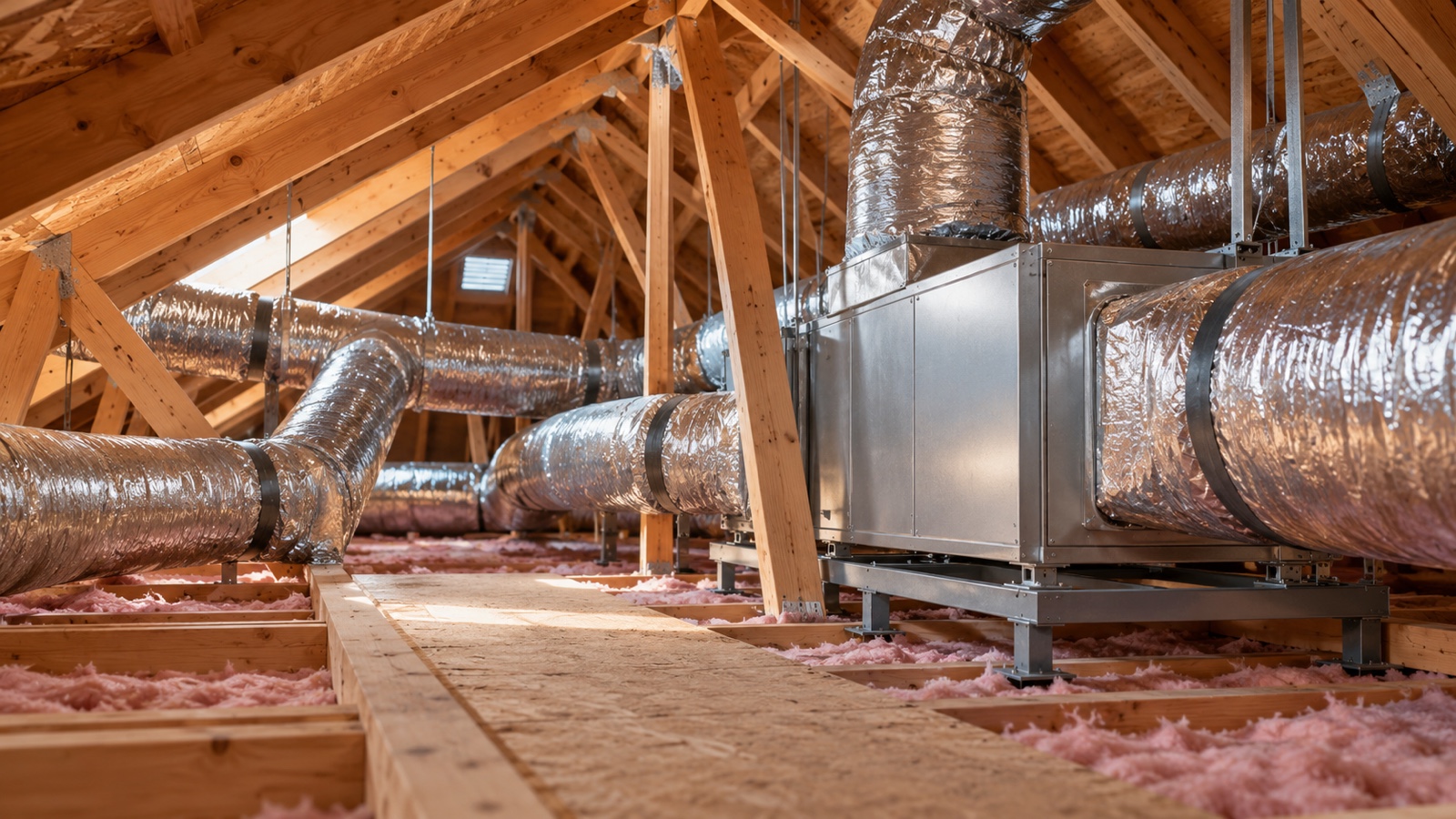
The image above is a fictional editorial photograph. It is not a real home, heating and cooling installation, inspection, client property, or performance claim.
Which equipment should be on the list?
Write down every heating and cooling method serving the property. A home may have a furnace, heat pump, wall heaters, mini-split units, central air conditioner, or more than one system. Note the location of the equipment, thermostat, vents, outdoor unit, and any room that appears to have no obvious supply. Ask the seller which equipment is owned and included, and compare the answer with the listing and contract.
The NAR home-inspection guide includes heating and air conditioning among the systems a general home inspector may assess. The California DRE buyer guide advises buyers to use professionals for heating and cooling and other major systems. A general inspector can flag concerns, while a qualified heating and cooling contractor can investigate a narrower technical question.
My Bay Area buying guide places this system review beside financing, documents, and the rest of the property condition.
What documents should you request?
Ask for installation invoices, permits and final inspection records if applicable, maintenance receipts, repair invoices, warranty documents, model information, and any service contract. A label on the cabinet can help a technician identify equipment, but it does not show when a complete system was installed. An invoice may cover one component while other components are older.
Compare the seller's disclosure with the documents. My disclosure-package guide explains how to separate a statement from its supporting attachments. If a document is missing, ask whether it exists rather than guessing an age or service history. Record the date and scope of each repair.
Ask the local building department about permit records when installation or replacement appears to have involved regulated work. The authority determines permit status, and a contractor can assess the installation. Do not assume a permit automatically proves present condition.
What can you learn by operating the system?
With permission and suitable conditions, ask the inspector to operate heating and cooling through normal controls. Note whether the equipment starts, stops, and responds to the thermostat, whether air or heat reaches the expected rooms, and whether there are unusual sounds or odors. A short test is an observation at that moment, not a guarantee of performance in every season or under every load.
Do not force a system to run if the inspector or manufacturer advises against it because of weather, power, maintenance, or another condition. A skipped test is an open item, not a pass. Ask a heating and cooling contractor what can be evaluated safely and what must wait. If the equipment is shut off, ask why and request a written explanation.
My second-showing guide gives buyers a way to note what they can see and what needs a specialist.
When is a specialist inspection useful?
Ask for a qualified heating and cooling contractor when the general inspection notes weak airflow, uneven temperatures, unusual cycling, noise, visible corrosion, a condensate concern, disconnected ducts, an inaccessible component, or equipment the inspector did not test. Also consider one when a system's condition is central to your budget or use of the home. Ask the contractor for the scope, what will be tested, what cannot be tested, and a written report.
A specialist can diagnose and price a repair or replacement within the limits of the visit. Ask whether its estimate includes labor, permits, related electrical work, duct changes, disposal, and any necessary follow-up. Do not treat one rough quote as a final cost for hidden work.
Set the inspection before the contract deadline where possible. My Pre-Offer Five connects condition questions with financing, price, documents, and timing.
What should you ask about filters, ducts, and vents?
Ask where filters are located, what type the equipment accepts, when they were last changed, and whether the contractor sees airflow or duct issues. Look for blocked registers, loose visible ducts, stains near vents, or an air return that appears damaged. Do not open equipment panels or enter unsafe spaces yourself. A visible condition is a reason to ask, not a diagnosis of contamination.
Ask the specialist whether ductwork is accessible enough to evaluate and whether cleaning, sealing, repair, or replacement is justified. Do not assume routine duct cleaning is needed because a vent has surface dust. The contractor should explain the evidence and scope of any recommendation.
For a room that feels different from the rest of the house, ask whether the cause relates to equipment, duct design, insulation, sun exposure, or another factor. A single thermostat reading cannot answer it.
How do thermostats and zones change the questions?
Find out whether one thermostat controls the whole home or separate zones have different equipment and controls. Ask which rooms each control serves. If there is a smart thermostat, ask how it will be transferred or reset and whether an account or subscription is required for a feature. The seller should not share personal login credentials as a casual handoff.
Test controls only as the inspector or technician recommends. A display can light up even when a heating or cooling component is not working. Ask the contractor to explain any fault code or intermittent behavior. Keep a photo of the model label and the contractor's written finding.
If the home has a room addition or converted space, ask whether the existing system serves it and whether the work was permitted. The local authority and contractor answer those questions.
What do water stains or drainage near equipment mean?
Photograph any staining, wetness, rust, blocked drain, or water around an indoor unit. Do not identify the cause yourself. Condensate, plumbing, roof water, or another source may be involved, and a qualified professional should trace it. Ask whether the issue is active, what was repaired, and what documentation supports the answer.
Water near electrical equipment or a suspected gas problem calls for qualified help. Follow the inspector's safety direction and do not keep testing an unsafe system. A heating and cooling contractor, plumber, electrician, or other specialist may be needed depending on the finding.
Ask the seller for related repair records and disclose the condition question to your lender or insurer if they request it. Keep the decision tied to written evidence.
What if a component is inaccessible or the system is off?
Have the inspector state exactly what could not be seen or operated and why. A locked closet, stored belongings, missing power, outdoor temperature, or disconnected control can limit a test. Ask the seller and agents to arrange access or operation if the agreement allows. If it cannot be evaluated before your deadline, ask your agent and attorney about the written options.
Do not treat a seller statement that it worked last season as a substitute for current inspection. It may be true and still leave the present condition unknown. Likewise, a system that starts once may have hidden issues. Record the limitation and decide what further evidence you need.
My contingency guide explains why an unresolved system question belongs in the broader contract decision.
How do age and service history affect a decision?
Ask the contractor to identify model and serial information and explain what can be reliably learned about age, maintenance, and condition. Older equipment is not automatically failed, and newer equipment is not automatically installed or sized correctly. Service records can show what was done, but an invoice for one repair is not proof of a complete overhaul.
Ask about the parts most likely to need attention, what preventive service is appropriate, and whether the contractor can provide a repair or replacement range. A remaining-life prediction is uncertain. Use the inspection findings and written estimate for your budget, not an online average or a seller's memory.
Keep any warranty question with the manufacturer or provider. Ask whether it transfers, what documentation it requires, and whether conditions apply.
Should you use utility bills to judge efficiency?
They can offer context, but they do not isolate the heating and cooling system. Bills reflect weather, occupancy, thermostat use, other appliances, rate plans, and many other factors. Ask the seller for records if available, but do not promise future monthly cost from another household's bills.
A heating and cooling contractor can explain the equipment's rated information and whether measured performance or a larger home energy assessment would help your question. Ask what data the assessment will produce and what decision it can support. Do not substitute an efficiency label for an inspection of the installed system.
If the projected carrying cost matters to financing, ask the lender for its calculation and keep your own budget conservative until you have better evidence.
How should a repair estimate enter the offer decision?
Separate the contractor's finding, proposed scope, quoted amount, and unknowns. Ask whether a repair is practical or whether replacement should also be priced. If the work affects ducts, electrical service, permits, walls, or ceilings, ask for those related costs. Do not add a guessed discount to an offer merely because equipment is old.
Discuss the verified issue with your agent. A seller might repair, offer a credit, decline a change, or negotiate another written solution. The contract and lender may affect what is feasible. Ask an attorney about a legal dispute, and ask the contractor to confirm any technical completion.
Compare the total property decision, not one system in isolation. A good answer is a written scope and a clear allocation of risk, not a promise that the home will never need heating and cooling work.
Which heating and cooling review mistakes should buyers avoid?
Do not assume a working thermostat proves the whole system works.
Do not use a cabinet label as proof that every component has the same age.
Do not diagnose a stain, odor, or noise from a photo.
Do not ask an agent to certify equipment condition or remaining life.
Do not ignore an untested mode or inaccessible part because the rest of the house feels comfortable.
Do not count a seller's verbal repair promise until it appears in a written agreement with a clear scope.
Can a general home inspection replace a heating and cooling inspection?
It can identify visible conditions and operational concerns within the inspector's scope. It may not diagnose a fault, evaluate hidden ducts, test every mode, or price a repair. Ask the inspector what was tested and what was excluded. Bring a qualified heating and cooling contractor when the unresolved question matters to your decision.
What should you do next?
List each heating and cooling system, request installation and service records, note what the general inspector tested, and arrange specialist follow-up for a material concern. Ask for a written scope and estimate, then put any unresolved item beside your contract deadline and full home budget.
Read my San Mateo County buying page for the broader search plan. If you are evaluating a particular property, contact me with the inspection language and seller records. This is general information, not inspection, mechanical, electrical, gas, legal, insurance, lending, or financial advice. Qualified professionals and the signed documents control the details.