2026-11-20 · 9 min read · Bay Area
How Do Buyers Verify a Condo Entry-System Handoff?
How do buyers verify a condo entry-system handoff?
For a condo entry-system handoff, make a list of every door, gate, garage entrance, elevator control, and shared room you expect to use. Ask what opens each one, who issues or changes that credential, how many working keys or fobs will transfer, and what must be set up in your own name after closing. Test permitted access before removing the relevant contract contingency when possible, then confirm the final handoff with the seller and homeowners association. A unit key alone does not answer the building-access question.
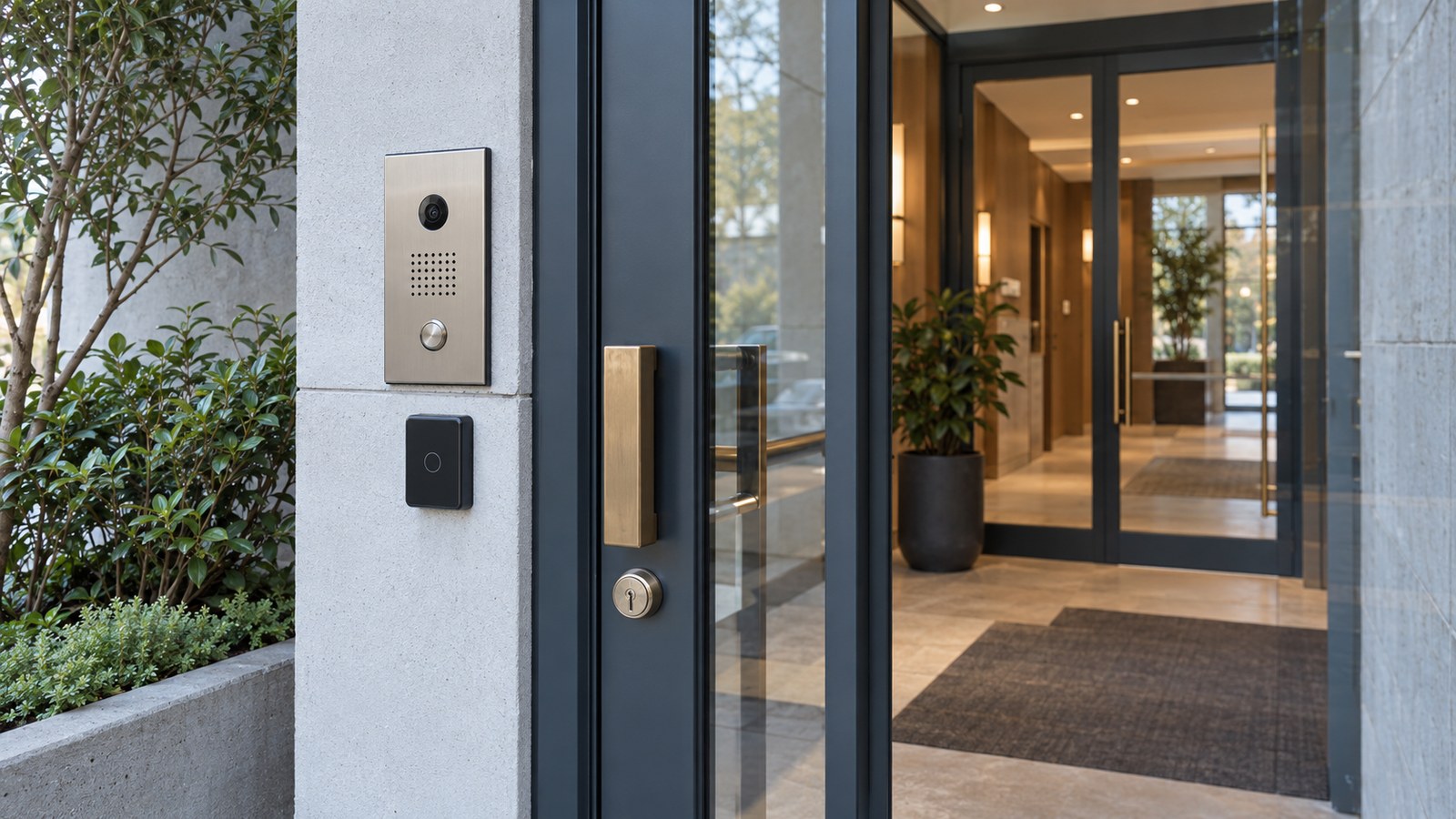
I am Kate Fomina, a broker at Crypton Realty in Alameda. I help buyers separate what a seller can hand over from what the association or its manager controls. My Bay Area buying guide explains how property and document questions fit into the wider decision. The image above is a fictional scene, not a real condominium, access system, or transaction.
Which access points should you map before closing?
Walk the route you would actually use. Start at the street or garage, move through the lobby and elevator, reach the unit door, and then check any storage, bicycle, package, laundry, or other shared area you expect to access. Write down the device or procedure for each point. A metal key, wireless fob, keypad code, phone app, intercom call, garage remote, and staffed entry are different systems. One credential may open several places, but do not assume it does.
Compare the observed route with the seller's handoff list and the association's rules. If the listing says a parking space or storage area is included, verify the right to use it through the property documents as well as the ability to open the door. Access hardware does not establish ownership or an exclusive-use right. A borrowed fob may work today without being transferable to you.
Keep the list tied to the exact building and unit. A complex can have several entrances with different schedules or controls. Note any route that could not be tested and who can answer the question. My Alameda County buying page provides the broader local home-search context.
What should you ask the association or manager?
Ask the association or its authorized manager which entry devices are assigned to the unit, how replacement devices are ordered, whether old credentials can be disabled, whether an owner must register before receiving new access, and whether there are transfer or replacement charges. Request the current written procedure and contact information rather than relying on a neighbor's memory. The seller may possess a fob but may not control the building database behind it.
Ask whether guests, deliveries, vendors, and emergency service providers use separate procedures. The question is about the building's operating rules, not a promise of unrestricted access. If a particular access feature matters to your decision, write down the association's answer, its date, and any unresolved step. Do not share a live building code in a public message or store it in an open disclosure packet.
The California Department of Real Estate's common-interest development guidance tells buyers to read governing documents and association rules because they can affect use of the property. It does not say that every condo has the same access policy. Read the rules for this association and ask counsel about any disputed interpretation.
What records should you review before trusting a seller’s description?
Look for the governing documents, operating rules, move procedures, access-device forms, recent policy notices, and any building instructions the seller received. Ask the association if the packet is current. The DRE guidance links the seller's delivery of common-interest development documents to California Civil Code section 4525. A buyer should check what was actually delivered and discuss missing or unclear documents with the agent and counsel.
Compare the paperwork with the physical entry route. A rule might allow replacement fobs but require the new owner to submit a form first. A seller might describe an app that works through a personal account rather than an association-issued credential. Identify the difference before you rely on it. If the operating rules say something different from a manager's email, ask the association to reconcile them in writing.
My condominium disclosure-package guide explains the seller-side document task. My HOA budget guide covers a separate financial question. Neither replaces a current answer about entry permissions.
How do keys, fobs, remotes, and codes differ at handoff?
Make a simple table in your notes with columns for access point, device or method, person who controls it, number promised, test result, and next action. Count physical items individually. A unit key may have copies the seller does not know about. A building fob may be registered to one person or one unit. A garage remote may be tied to equipment that the association maintains. A door code may be shared across many residents or unique to the unit. Ask the responsible party how each is changed or revoked.
At the final handoff, compare the actual items with the written list. If an item is missing, do not assume a hardware store can copy it. The association may have a controlled issuance process. If a device is damaged, ask who orders a replacement and whether that can be done before closing. Put any unresolved item through the agents in writing, with a specific next step.
Keep security credentials out of the article, listing photos, and broad email threads. The useful record is the existence, holder, and transfer method, not a published working code.
What should you verify about an intercom or phone app?
Ask whether the lobby intercom calls a fixed phone number, a unit directory, a building service, or a personal app. Confirm who can change the directory entry and when a new owner may request it. A working intercom at a showing only proves that the current setup worked during that test. It does not prove the account, number, or guest-entry permission will transfer.
For an app, ask which company or association account controls it, whether a new account is needed, whether the seller can remove their own access, and whether building management must approve the change. Do not ask a seller to give you their personal password. The Federal Trade Commission's smart-home advice recommends that sellers remove administrative access and personal information and that buyers reset connected devices and set up their own accounts where applicable.
Ask what works if a phone is lost, the app is unavailable, or a service stops. The answer may be a physical key, staffed procedure, or manager contact. Verify the actual system rather than assuming every connected entry has a manual fallback.
Who controls a smart lock on the unit door?
Separate a lock installed on the unit from a building-wide entry system. Ask whether the lock is included in the sale, whether the association limits door hardware, and whether the seller's app or account still has administrator rights. Look for model and setup instructions, but do not treat a printed manual as proof that the lock was reset. Confirm who will remove existing codes, guest access, and connected services at handoff.
The FTC advises new owners to reset smart devices, review privacy settings, create their own account, and check support and warranty terms. Follow the device maker's current instructions and the association's rules. If the lock cannot be reset or transferred cleanly, ask a qualified locksmith or the manufacturer about the available options. An agent should not promise a technical fix.
Also ask whether the seller has keys for the mechanical cylinder and whether the cylinder is part of the association's key plan. Replacing a unit cylinder without checking association rules could affect authorized building access. The point is to know who controls the door after closing, in both the digital and physical ways.
When should you test access, and what can a test prove?
During an allowed visit, ask to try each credential with the appropriate person present. Observe whether the lobby, garage, elevator, unit, and relevant shared rooms open as described. Record the date and result. Do not enter a restricted area just because a fob happens to activate a reader. Ask the association which spaces the unit is entitled to use.
A successful test answers a narrow question: the device worked at that moment. It does not prove that it is registered to the seller's unit, that it can be transferred, or that its service will continue. A failed test also needs context. The device may be inactive, the door may be on a schedule, or a separate authorization may be required. Ask the manager for the reason rather than guessing.
If an area is unavailable before the contract deadline, document that gap and ask your agent what the agreement allows. Do not remove a contingency on the assumption that the answer will be easy after closing. My second-showing checklist
What should the final transfer list include?
- Identify each entry point and the credential expected to work there.
- Record the number of physical keys, fobs, remotes, and other devices promised.
- Confirm which items the seller transfers and which the association must issue anew.
- Ask who disables old credentials and when that change can occur.
- Collect the current manager contact and the association's written setup steps.
- Confirm the unit intercom directory and any phone-app account change.
- Arrange a smart-lock reset and new owner account without exchanging personal passwords.
- Record replacement charges, forms, and any unresolved test.
- Check the actual handoff against the list at the agreed time.
This checklist is a working record, not a substitute for the sale agreement or association documents. Keep it with the rest of your closing notes. If the seller cannot supply an expected device, ask the agents to identify a written solution before closing instead of treating a spoken promise as completed delivery.
Which mistakes cause the most confusion?
Assuming the unit key opens everything. Condos can use separate systems for the garage, lobby, elevator, and shared spaces. Map the route rather than counting one key.
Confusing access with rights. A fob opening a room does not prove that the unit has a storage or parking right there. Read the governing and property documents.
Taking over a personal account. A seller's app login may expose private data and may not be transferable. Ask for a clean new-owner setup.
Waiting until move-in. A missing fob or unregistered intercom is easier to identify while the seller and association can still answer together. Put the open item on the closing list.
Assuming a test settles the future. One successful swipe does not establish transfer rules or replacement cost. Ask the manager to confirm those pieces.
Do all condo fobs automatically transfer with the unit?
No universal answer applies. The seller can deliver a physical fob they hold, but the association or its manager may control registration, activation, and replacement. Ask how this building assigns credentials and whether the existing ones will remain active for the new owner. Have the transfer steps and any charge confirmed in writing.
Can a buyer ask for old access codes to be disabled?
Ask who controls each code and what reset or revocation the system permits. For a seller-owned smart device, the FTC recommends removing old administrative access and setting up the new owner's account. For a shared building system, the association may need to make the change. Do not assume the buyer or seller can alter a common-area credential without authorization.
What if the intercom or garage access will not work on closing day?
Tell your agent and the association contact exactly which access failed, when it was tested, and what the written handoff promised. Ask for the available temporary access procedure and a specific plan to correct the issue. If the failure affects a contractual obligation, have California counsel explain the parties' options. Do not improvise a security workaround or declare a legal remedy from this general guide.
For help organizing condo documents and access questions before you buy, contact Kate Fomina. My buying process