2026-10-14 · 11 min read · Bay Area
What Should Buyers Check in a Condo Master Insurance Policy?
What should condo buyers check in a master insurance policy?
Ask for the association's current master policy and evidence that it is in force. Have an insurance professional explain what property it covers, the limits, deductibles, exclusions, and whether separate policies fill any gaps. Compare that answer with the condominium's governing documents, your proposed unit-owner policy, and the lender's requirements. A certificate with a coverage number is a starting point, not a complete explanation.
I am Kate Fomina, a broker at Crypton Realty in Alameda. I help buyers obtain the right documents and put questions to the association, insurer, and lender before a decision deadline. I do not interpret insurance coverage, certify a project, or promise a loan outcome. Those determinations belong to the policy professionals and lender.
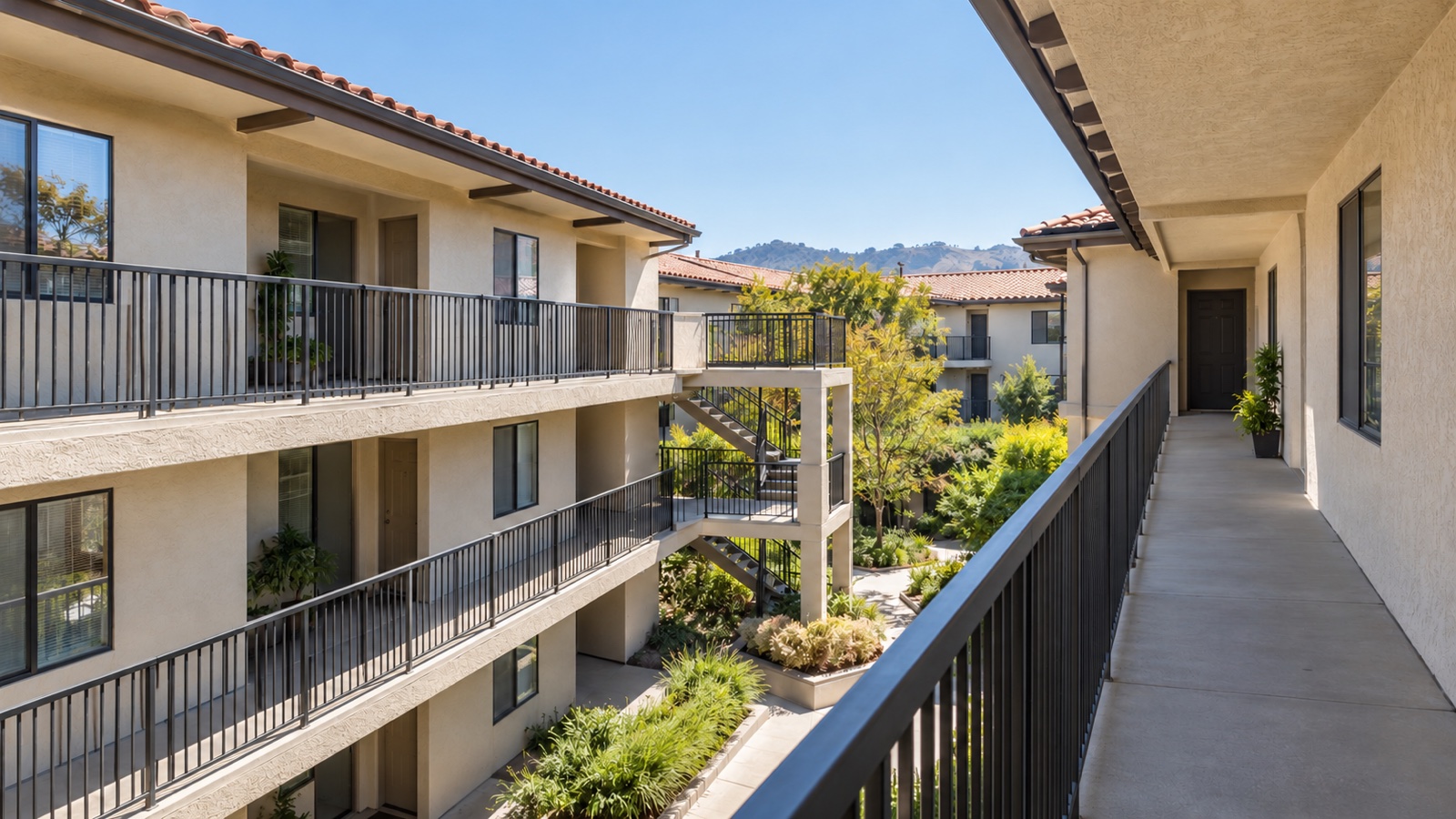
The image above is a fictional editorial photograph. It is not a real condominium, policy, coverage limit, client property, or insurance decision.
What is the difference between the master policy and a unit-owner policy?
The association commonly maintains insurance for shared property, while a unit owner may need separate coverage for the interior, belongings, liability, or other exposures. The actual boundary depends on the declaration, bylaws, master policy, and unit policy. The Freddie Mac condo guide explains the basic distinction and cautions that master policies vary. It also notes that loss-assessment coverage may be relevant depending on the association's rules.
Do not infer that the association covers a kitchen because a master policy exists, or that a unit policy repairs the building exterior. Give both sets of documents to a licensed insurance professional and ask for a written description of what each policy does. If the governing documents and insurance description appear to conflict, ask the association and an attorney to clarify their meaning.
My Bay Area buying guide places this review alongside condition, financing, and contract timing. A condo adds a project-level document layer to the unit review.
Which documents should you request together?
Request the current master property policy or a complete copy available from the association, the declarations page, endorsements, and a current certificate of insurance. Ask for any separate flood, earthquake, liability, or other policy relevant to a question the association or lender identifies. Obtain the governing documents that define which components the association maintains and insures. Ask for the annual insurance summary and any notice of a coming renewal or material change.
The California Department of Real Estate's common-interest guidance urges buyers to read association documents carefully and ask who maintains insurance for different parts of a unit. A summary can help identify policies, but the insurer and policy text answer coverage questions.
My disclosure-package guide shows how to compare a summary with attachments and updates. Record the issue date of every insurance document so an expired certificate does not stand in for current evidence.
How do you confirm the policy is current?
Check the named insured, project name and address, policy number, carrier, effective and expiration dates, and any listed buildings. Ask the association or manager whether premiums are paid and whether a cancellation, nonrenewal, or replacement notice has arrived. An older packet may contain a policy that was valid when assembled but has since changed. Request updated evidence close enough to the decision for your lender and insurer to use it.
The Fannie Mae evidence-of-insurance guide describes the current master policy or a certificate showing that the unit is covered as possible lender evidence in applicable loans. The lender determines what it needs for your loan. An agent cannot certify that a certificate satisfies underwriting.
Ask who will notify owners if coverage changes before closing. If the policy renews during escrow, get the replacement information and send it to the lender and unit-policy professional promptly.
Which parts of the building are insured?
Ask whether the master policy covers common elements, residential structures, unit interiors, fixtures, owner improvements, balconies, garages, parking structures, and any separate amenities. The answers may differ by component. The Fannie Mae master-policy guide says that, for loans subject to its rules, a lender generally verifies coverage for common elements and residential structures when a master policy is required. It also describes how the legal documents can change the individual-policy requirement.
Do not treat Fannie Mae's rule as the wording of this association's policy. Ask the insurance professional to point to the actual coverage form, exclusions, and endorsements. A declaration may assign maintenance to the owner even when the association insures some part of the structure, or the reverse. A condominium attorney can clarify governing-document responsibilities.
Make a simple map of the unit and shared areas with the responsible party and policy noted beside each uncertain component. Leave unanswered spaces visible rather than guessing.
How should you read coverage amounts?
Identify the building or blanket limit, any sublimits, and the basis on which a loss would be settled. Ask whether the insured value reflects a current replacement-cost estimate, a different method, or an older appraisal. A large number on a certificate does not by itself show that the amount is enough for the project. Ask the association and insurer what valuation they used and when it was updated.
Fannie Mae's project insurance guide describes coverage sufficiency and replacement-cost evidence for the loans to which its requirements apply. That is a lender standard, not a buyer's own coverage analysis. Your lender can say whether the project meets its program, while the insurance professional can explain what the policy would pay under its terms.
If the association is planning major work or has made a claim, ask whether that changes the valuation or coverage. Do not estimate rebuilding cost from a sale price. The two answer different questions.
Why do deductibles matter to an owner?
A master policy deductible is the amount the association may need to absorb before coverage responds to a covered loss. Ask whether different events have different deductibles, whether a deductible is per occurrence or per unit, and how the governing documents permit the association to allocate an expense. The policy and documents matter more than a headline number.
Fannie Mae's current master-policy guide has deductible limits for applicable loans, including different treatment of per-occurrence and per-unit amounts. Do not apply those thresholds yourself to declare a project eligible. Give the policy to the lender. Ask the association and an insurance professional how a deductible might affect owners after a claim, and ask an attorney to interpret an allocation provision if needed.
Ask whether a unit-owner policy offers loss-assessment or deductible-assessment coverage and what conditions or limits apply. It may not cover every charge. A written comparison is more useful than an assumption that the HOA fee pays every loss.
What exclusions and separate policies need attention?
Ask the insurer to identify major excluded events, sublimits, and endorsements. If the project has a question about flood, earthquake, equipment breakdown, or another event, ask whether the association has a separate policy and how it works with the master property policy. Do not infer coverage from a hazard label or from the fact that an association has insurance.
Fannie Mae's master-policy guide lists required perils and some special coverage types for loans under its program. Those standards can alert you to questions for the lender, but the actual policy controls a claim. Ask the association to supply any companion policy and the professional to explain gaps between them.
Keep the review property-specific. A building's roof, equipment, location, and construction details can affect a quote or underwriting. Only the insurer can assess eligibility or price for the project, and only the lender can apply its current loan rules.
What about liability coverage and shared spaces?
Ask whether the association has general liability coverage for common areas and what property or activities it covers. Ask about any separate policies for amenities, employees, or directors if the association documents raise those subjects. Do not assume the master property policy answers every liability question. Its property coverage and a liability policy serve different purposes.
Your own unit-owner policy may address personal liability, but the scope depends on its wording. An insurance professional can compare the association's policies with the policy proposed for you. The association's manager can identify the policies it holds, while an attorney can clarify a legal responsibility under the governing documents.
Use the questions to locate documents, not to label the building safe or unsafe. The buyer needs verifiable coverage and a clear handoff between association and owner obligations.
How do governing documents change the insurance answer?
Read the declaration, bylaws, and insurance section together. Ask who must insure original fixtures, later upgrades, windows, balconies, plumbing serving one unit, and shared systems. Words such as unit boundary or common element can carry specific definitions in that project. Do not rely on a general internet description of condominium ownership.
The DRE common-interest guidance asks buyers to consider responsibility for insurance and maintenance of unit components. If the policy summary appears broader or narrower than the governing documents, ask the association and insurer for an explanation in writing. Your agent can organize the question, and an attorney can explain the legal documents if their meaning is disputed.
Record the version and date of each document. An amendment can change responsibilities. Ask whether the association is considering a change that has been announced but is not yet reflected in an older packet.
Could a claim or assessment affect the review?
Ask whether the association has open insurance claims, unpaid deductibles, a pending assessment related to a loss, or a notice that coverage may change at renewal. The association can provide the documents and current status. Do not assume a past claim means the project cannot be insured or that a pending claim will be paid. Both are questions for the insurer and association.
Compare any insurance-related assessment with the budget and meeting minutes. A charge may relate to a deductible, uncovered repair, premium, or another expense. Ask for the written reason and amount rather than assigning a cause from a line item. An accountant or attorney may be needed to interpret the financial or legal impact.
Ask a unit-policy professional whether loss-assessment coverage is available for the particular charge, with what limit and exclusions. A policy name alone does not guarantee reimbursement.
When should the lender review the master policy?
Send the available policy evidence and association documents to your lender early in the contract period. Condo loan approval may depend on project review as well as your own finances and unit appraisal. A lender may request a full policy, certificate, endorsement, updated declaration, or another document. Ask what remains outstanding and when the lender expects an answer.
Fannie Mae's guide states the lender or servicer verifies required master coverage for loans subject to its rules. Other loan programs may differ. Do not tell a buyer that a condo is financeable because another unit closed previously or a listing says conventional financing is available. The current lender decides under the current program and project documents.
My Pre-Offer Five puts financing and documents on the same decision timeline. If a policy issue remains open near a contingency deadline, ask your agent and an attorney about the written options before the deadline passes.
How should you coordinate the unit-owner policy?
Give the master policy details and governing documents to a licensed insurance professional when seeking a quote for your unit. Ask the professional to identify interior coverage, belongings, liability, loss assessment, deductibles, exclusions, and any extra policy or endorsement that may be appropriate. Ask when coverage can begin and whether the quote is conditional. Send the proposed policy to the lender for its review.
Freddie Mac's condo guide describes the unit-owner policy as a separate layer and notes that master-policy details vary. The amount of coverage you need cannot be inferred from a generic condo example. The insurer can explain what it offers, the lender can state its minimum, and you can decide with professional advice what additional coverage fits your circumstances.
Keep written answers. If the association changes carriers or deductibles before closing, ask both the unit-policy professional and lender whether your plan changes.
Which warning signs deserve a specific follow-up?
An expired certificate, missing policy pages, unclear unit-interior boundary, unusually worded exclusion, large or changing deductible, open claim, announced assessment, or renewal during escrow all deserve a written question. None alone proves the project is uninsurable or the agreement should end. They identify missing information or a possible cost that the right professional should review.
Do not accept a manager's verbal assurance as the whole policy. Ask for the document and the name of the person who can answer coverage questions. Do not use a lender's preliminary approval as proof that every insurance condition is complete. Ask the lender for the current status of project review.
Use my buying process guide to place the response date beside inspections, disclosures, and financing. A useful question has an owner, a document, and a deadline.
Is a certificate of insurance enough to understand coverage?
No. It can identify the carrier, dates, limits, and some policy information, and a lender may accept it as evidence for a specific purpose. It does not necessarily include every exclusion, endorsement, valuation term, or responsibility stated in the governing documents. Ask for the policy and professional explanation needed to resolve your questions.
Does lender acceptance mean the condo is fully protected?
No. Lender acceptance means the lender has applied its requirements for that loan based on the information it reviewed. Your financial exposure and coverage preferences can differ. Ask an insurance professional what the association and unit policies cover, what they exclude, and what you could owe after a loss. Ask an attorney about contested governing-document duties.
What should you do next?
Request current master-policy evidence, governing documents, and any separate policies. Mark the coverage boundary, limits, deductibles, exclusions, claims, and renewal questions. Send the package to your lender and insurance professional early, then track the written answers before a contract deadline. Do not declare coverage complete while a material question is unanswered.
Read my San Francisco buying page for the broader search plan. If you are comparing a specific condo, contact me with the documents you have and the unanswered questions. This article is general information, not insurance, lending, legal, tax, inspection, or financial advice. The policies, signed documents, lender, and qualified professionals control the details.