2026-08-17 · 5 min read · Bay Area
Why Two Almost Identical Homes Sell for Different Prices
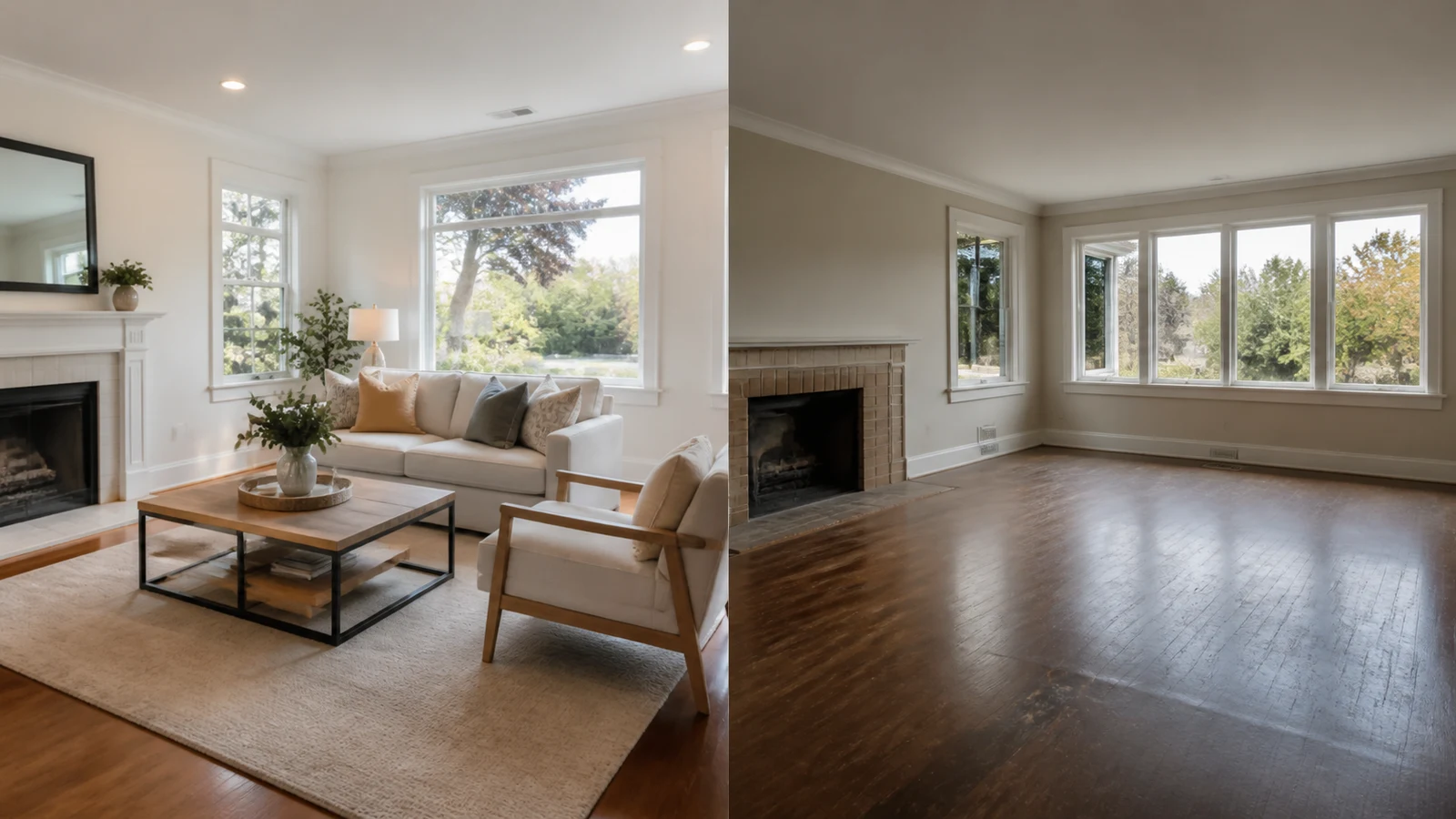
The question I get at almost every open house
Somebody pulls up two listings on their phone and holds it out to me. Same street. Same number of bedrooms. Almost the same square feet. Built a couple of years apart.
One sold fast, above what the seller hoped for. The other sat, dropped its price, and closed for a lot less.
How does that happen?
Those two houses were never the same. They only looked the same in the one place most people compare houses, which is an app showing four numbers and twenty photos.
That view leaves out almost everything that decides what a house is worth to the person writing the check.
An app compares houses. Buyers compare lives.
The fields a listing site shows you are the ones that are easy to put in a database. Beds. Baths. Square feet. Lot size. Year built.
None of that is what a buyer is actually choosing between.
A buyer standing in the kitchen is deciding whether the afternoon light is depressing. Whether the second bedroom is a real bedroom or a closet the listing is calling a bedroom. Whether they can hear the road with the windows shut. Whether the main bedroom shares a wall with the neighbor's driveway.
None of that is a field anywhere. And it moves the price more than square feet does.
This is the part people find most surprising about pricing here. It is also why I will not give you a number off a screen.
What actually makes the gap
It usually comes down to a short list.
The block, not the zip code. A quiet street and a cut-through street two hundred feet away are different products. So are two sides of a school line. Buyers pay for the block, and that does not show up in a square-foot comparison.
How the house actually lives. Walk in and face a wall, or walk in and face light. Same size, completely different feeling. You cannot photograph it. You feel it in about four seconds.
Condition, which is not the same thing as updates. An old but solid roof and years of real maintenance often beats a new counter with a furnace nobody has touched in twenty years. Buyers see the counter. Their inspector sees the furnace.
How it came to market. This is the one sellers underestimate most, and it is why the way I launch a home is built around the weeks before it goes live instead of the weeks after.
The first week is not a warm-up
A house gets one first week. That is when the alerts go out, when the buyers who have watched that neighborhood for months finally see something new, and when other agents actually look.
Show up that week fully ready, priced on purpose, photographed properly, already in front of the right people, and the house gets all the attention it is ever going to get.
Show up half ready, photos still coming, price set on hope, and it spends that one week being ignored.
After that it is not a new listing anymore. It is a house with days on market, and that is a weaker product no matter how good the house is.
Two identical homes, one launched and one just listed, are not in the same fight. That is most of the gap right there.
More on that in what the first ten days decide.
The list price is a strategy, not a value
This is the part that changes how you read listings forever.
The number on the listing is a decision somebody made about how to attract buyers. It is not a measurement of the house.
Sometimes it is set low on purpose, to pull a crowd in and let them bid it up. Sometimes it tracks what similar homes actually sold for. And sometimes it is just high, because a seller wanted a number and their agent did not want to argue and lose the listing.
Three different choices. Three completely different results out of the same house.
So when you see two similar homes with different outcomes, you are often looking at two different pricing decisions, not two different houses.
All three are legitimate. They carry different risks. What is not legitimate is an agent who cannot tell you which one their number is.
More on that in how to tell which one you are looking at.
So how do I figure out what a house is worth?
I start with what sold, not what is listed. A listing is an ask. A sale is an agreement.
Then I get narrow. Same block if I can. Same school line. Same direction the house faces. Same era. Recent enough that the market has not moved underneath the number.
Then I go walk the house. Every time. What did the sold one have that this one does not, and the other way around. That part is the actual work and nobody can do it from a desk.
Then I look at what a buyer in this exact range is choosing between right now. A house with no real alternative behaves very differently from one with four options this month.
We're not guessing. We're making decisions based on information.
What to do with this
If you are buying, stop treating the list price as the value, and stop treating two similar listings as two similar chances. Ask what sold nearby. Ask what this house has that those did not. Ask how many people you are really up against.
That is where the five questions I go through before any offer start.
If you are selling, most of that gap gets created before the sign goes in the yard. Prep, positioning, and that first week are not decoration. They are the difference.
Want a straight read on one specific house, buying or selling? Get in touch. English or Russian, whichever is easier.
You can also see how I sell a home and how I work with buyers.