2026-11-06 · 12 min read · Bay Area
How Should Bay Area Buyers Review a Shared Driveway Maintenance Agreement?
What should you check in a shared driveway maintenance agreement?
Read the shared driveway maintenance agreement and the recorded access document before you decide what the driveway means for a Bay Area home. Identify the land covered, each parcel's right to use it, who approves work, how repairs are paid for, and what happens when owners disagree. Then walk the actual route. A clean strip of pavement does not answer a title or cost question.
I am Kate Fomina, a real estate broker at Crypton Realty in Alameda. I help buyers organize property questions and transaction deadlines across the San Francisco Bay Area. A title officer explains the title report and policy. A California real estate attorney interprets legal rights and obligations. A qualified contractor evaluates condition and repair scope. Keep those jobs separate.
The California Department of Real Estate buyer guide tells buyers to read the preliminary title report and ask questions before signing. A driveway agreement is one of the records worth asking for when access is shared.
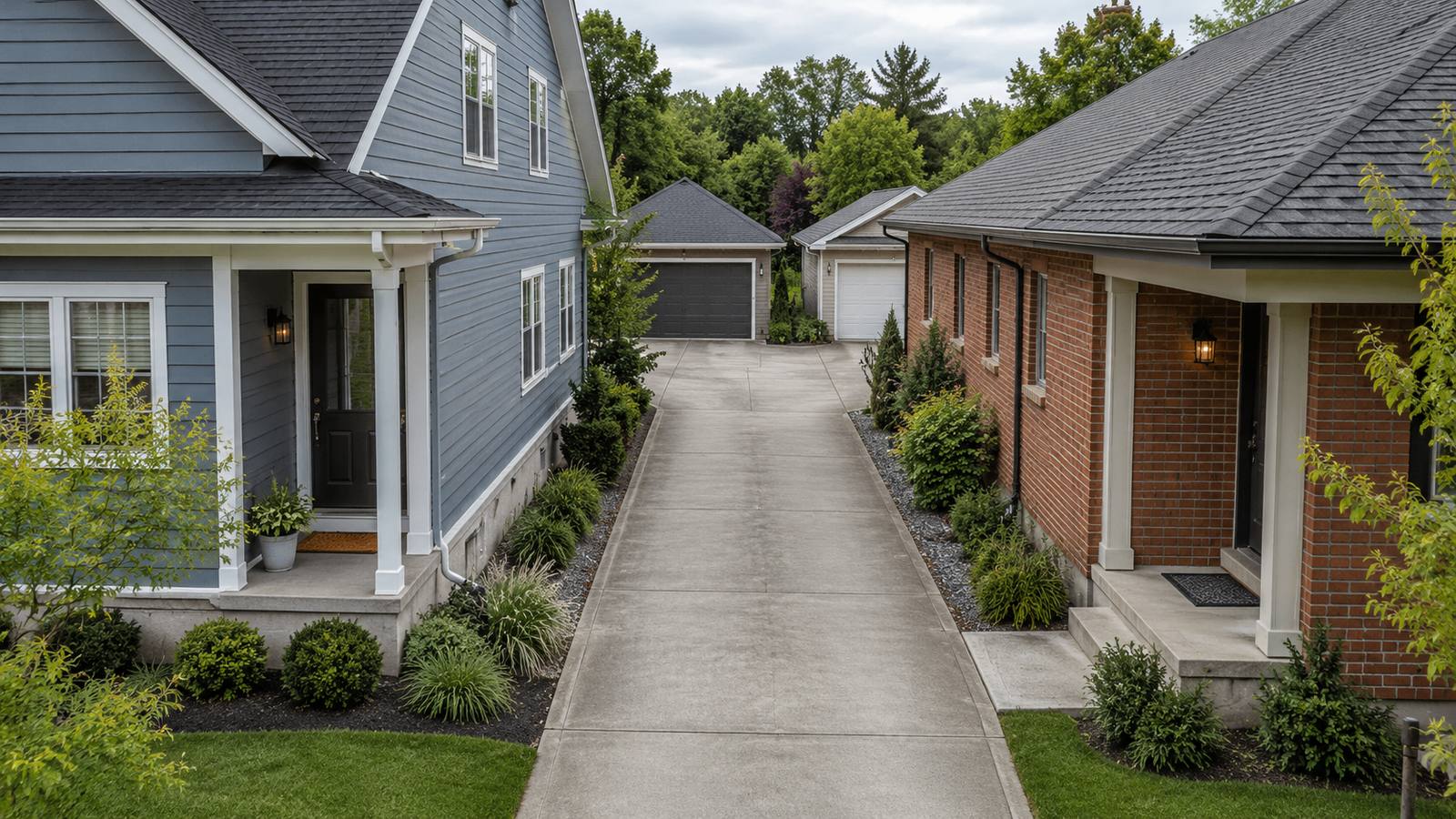
The image above is a fictional AI-generated image. It does not depict a real property, surveyed boundary, recorded agreement, or client transaction.
Is the driveway shared, or does it only look shared?
Start with the physical layout, then ask what the records say. A driveway may sit partly on each parcel, lie wholly on one parcel while serving another, or be common property under a different ownership structure. Those arrangements do not create identical rights. A paved surface, gate, fence, or listing photograph cannot prove where the legal boundary runs.
Ask the title officer for the preliminary title report, the legal description, and copies of every listed easement or restriction affecting the access route. An easement is a legal right to use another parcel for a stated purpose. The DRE reference chapter on title explains easements as interests in land and describes how they can arise. The recorded instrument and its map or exhibit matter more than the label someone uses in conversation.
If the route on the ground does not match the document, write down the discrepancy. Do not draw a boundary from an online parcel map. A licensed land surveyor can locate a line or described easement when the precise location matters. My preliminary title report guide explains how to turn a title exception into a specific question.
Which documents should a buyer request first?
Ask for the recorded easement or mutual-use agreement, any separate maintenance agreement, referenced exhibits, the preliminary title report, and the seller's available repair records. If a homeowners association controls the route, request its governing documents and the applicable maintenance information too. Do not assume an HOA is involved merely because two homes use one driveway.
Read the California Transfer Disclosure Statement and any additional seller explanation. The DRE's current California law excerpts reproduce the disclosure question about shared walls, fences, and driveways whose use or maintenance may affect a property. The form also asks about easements and similar matters. A checked box should lead you to the underlying document and a clear explanation, not end the review.
Ask whether the seller has invoices, notices, bids, insurance communications, or correspondence about past driveway work. Such records may show what people did, but they do not necessarily establish the legal obligation for future owners. Keep the distinction visible. My disclosure-package guide helps you sort statements from supporting records.
What does the agreement let each property do?
Find the part that grants access. Does it identify the parcels and the part of the driveway covered? Does it describe vehicle and pedestrian use, entry for repairs, gates, utilities, parking, or changes to the surface? Some documents are narrow. Others refer to an exhibit that you must obtain to understand the route. Do not fill a missing term with an assumption about what seems fair.
Compare those words with the property you are considering. Look at the entrance, turning space, slope, drainage, garage approach, and any point where a parked car or stored item could block passage. Photograph a concern during an authorized visit and ask for the written document that addresses it. An existing habit between current owners may be different from the enforceable right conveyed to a buyer.
Ask the title officer whether the relevant document is recorded and how it appears in the proposed title coverage. Ask counsel to interpret a disputed scope or missing right. The general Bay Area buying guide shows where this investigation fits into a property decision. A broker can organize the questions, but cannot certify an easement boundary or resolve a legal ambiguity.
Who pays to maintain or replace the driveway?
Read the agreement's cost language word by word. Does it divide ordinary maintenance, drainage work, emergency repairs, resurfacing, and full replacement? Does it state a share or a method for calculating one? Who obtains bids, authorizes work, collects payment, and keeps records? A phrase such as shared maintenance may leave several of those decisions unanswered.
Ask what the seller has actually paid and for which work. Request invoices and the agreement behind any payment request. A past equal split does not prove that every future project is split equally. A one-time repair bill does not establish the condition of the entire driveway. For a material concern, a qualified contractor can describe visible condition and a proposed scope. A civil engineer or drainage professional may be needed for a technical question. Costs require a property-specific estimate, not a number copied from another sale.
If the agreement is silent or the owners disagree, do not announce who legally owes what. Ask a California real estate attorney to review the instruments and applicable law. That answer may matter before you commit to a price, deadline, or contingency decision. A practical budget includes unresolved obligations as questions until the responsible people provide written answers.
How are repair decisions made when owners disagree?
Find the approval process. Can one owner arrange a small repair, or must both approve every job? What notice is required? How are bids compared? Is there a procedure for urgent work and a method for resolving a disagreement? An agreement that names a cost split but never explains decisions can be difficult to use when the pavement fails.
Look for a contact or notice address in the document, then ask how current owners communicate in practice. Ask the seller whether any assessment, proposed work, unpaid invoice, or dispute is pending. Request the written record that supports the answer. Do not contact another owner to negotiate rights on behalf of the seller or assume a casual verbal reassurance binds a future owner.
Keep legal and relationship questions distinct. A cordial history can be useful context, but the recorded rights and signed obligations still need review. If a neighbor has blocked the route or a dispute is active, ask counsel what documents and remedies matter. If the driveway has damage, ask the right technical professional what work is needed. One conversation cannot replace both opinions.
Could the agreement affect your loan or title policy?
Tell your lender and title officer early that the property uses a shared driveway. Give them the same instruments you are reading. Ask whether the access arrangement, document wording, or a title exception raises a property-eligibility or coverage question for this specific loan and policy. Do not wait until the closing file is being assembled.
Fannie Mae's title-exceptions guidance addresses mutual easement agreements that establish joint driveways and describes conditions under which they may be treated as minor title impediments for conventional loans. That is a lender guide, not a promise that your lender will approve this property. Loan type, lender review, recorded wording, and title evidence still matter. Ask your lender for its own written requirements and timing.
Ask the title officer what the preliminary report lists, whether the easement document is available, and what the proposed policy will and will not insure. A report that mentions an easement is not itself a survey or a legal interpretation. If a lender wants an amendment or another document, ask counsel and title how that could be obtained before you assume it can be fixed during escrow.
How should you inspect the physical driveway?
Walk the entire route during an authorized showing or inspection. Look at pavement edges, visible cracks, grade changes, pooling marks, drainage outlets, retaining structures, gates, lighting, and the path into any garage or parking area. Note where the shared portion begins and ends according to the available documents, then flag anything that does not match. Do not open a utility structure or enter another parcel without permission.
Ask the general inspector what the inspection covers and which conditions need a specialist. A surface crack does not reveal the base beneath it. A dry visit does not establish how runoff behaves in rain. If drainage, slope, or support matters to your decision, ask a qualified professional for a scoped evaluation. The Alameda County buying page places property investigation inside the broader county search, but the driveway conclusion must be specific to the address.
Photographs and measurements are useful notes, not a substitute for title, licensed land surveying, engineering, or contractor work. Pair each observation with the question it creates and the person who can answer it. That is more useful than declaring the driveway good or bad after a quick drive past it.
What mistakes make a shared-driveway review weak?
First, relying on the listing description. Shared access may be described casually. Obtain the recorded instrument and read the exact land and use rights.
Second, treating a parcel map as a survey. An online map can help you form a question, but a licensed surveyor handles a boundary or easement location that needs professional determination.
Third, accepting a verbal cost split. Ask for the agreement and past records. Separate historical payments from future obligations.
Fourth, assuming a lender will be comfortable. Send the documents to your lender and title officer while there is time to ask follow-up questions.
Fifth, focusing only on pavement condition. Physical repair, legal access, decision authority, and insurance are separate issues. A new surface does not settle the other three.
Sixth, waiting until after a deadline. Your signed agreement controls investigation and contingency dates. Track the unanswered items before you decide whether to proceed, seek more time, or ask counsel about your options.
What should go on your review checklist?
- Access record: Obtain the recorded easement or mutual-use document and every referenced map or exhibit.
- Maintenance terms: Identify the work covered, cost formula, approval method, notices, and dispute process.
- Seller file: Read the disclosure answer, repair invoices, pending proposals, and any written dispute or payment notice.
- Physical route: Walk the authorized path and record the condition questions a qualified inspector should answer.
- Title and loan: Send documents to the title officer and lender. Ask what each will require in writing.
- Legal gap: Give disputed wording, missing rights, or a conflict between documents to a California real estate attorney.
- Decision date: Put every open question beside the relevant deadline in your signed agreement.
This is a working list, not proof that a property passes inspection or financing. Use it to name a missing answer. My buying process explains why the document review belongs before a rushed decision.
Does a shared driveway always require a separate maintenance agreement?
No universal answer fits every parcel. A recorded easement may address maintenance, a separate document may do so, or the available records may leave a gap. Some properties have an association with its own governing documents. Ask title for the full record set and counsel what it means for this property. Do not treat the absence of a document in the initial packet as proof that no obligation exists.
Can a buyer park on a shared driveway?
Do not infer a parking right from an access right. Read the easement or agreement for the permitted uses and any limits, then compare the route on the ground with the recorded description. Ask the title officer for missing exhibits and counsel about ambiguous language. A current owner's habit of parking there may not answer what a future owner may do.
What if the seller cannot find the agreement?
Ask the title officer to identify and provide the instruments listed in the preliminary report. Request any documents the seller holds, including prior title material, surveys, and repair correspondence. If a referenced agreement or exhibit remains missing, describe that as an open question. Ask counsel and the lender whether the gap changes your decision or the loan review. Do not create a replacement agreement from memory during a rushed transaction.
What should you do before you decide on this home?
Put the access document, cost terms, condition findings, title response, and lender response on one page. Mark what is verified and what remains unanswered. Then decide how those facts fit the offer price, intended use, and contract dates. If the records conflict, get a legal interpretation rather than guessing.
I can help you organize those questions before you commit. Read the Bay Area buying process and contact me with the driveway document or title exception you want to understand. This article is general information, not legal, surveying, engineering, construction, title, lending, tax, or insurance advice. The property records, signed agreement, and qualified professionals control the details.